Archive | main courses RSS feed for this section

Pasta with Eggplant Puree

2 Nov

We are in eggplant season, and I wanted to share an easy recipe I adapted a long while ago from Giada DeLaurentiis.  As usual, I use whatever I have handy in my pantry, fridge and what I believe my taste buds will prefer.

It’s easy to make, and the leftovers keep very well.


 Eggplant Pasta

PASTA WITH EGGPLANT PUREE

1 medium eggplant, peeled and cut into small cubes
½ pint of cherry tomatoes or 2 small tomatoes
2 garlic cloves
Salt and pepper to taste
½ cup of walnuts, toasted
½ bag of whole-wheat penne pasta
2 tbs Olive Oil
½ cup Parmesan Cheese, grated
½ cup flat leaf parsley, chopped finely – optional
  1. Preheat the oven to 400 degrees F.
  2. While the oven is heating, place walnuts on a baking sheet with lined with parchment paper.  Toast in the oven until you get a first whiff of walnut smell, about 5-8 minutes.  Remove from baking sheet and let cool on a separate plate.
  3. Line the baking sheet with new parchment paper.  Place the eggplant, cherry tomatoes, garlic on baking sheet.  Drizzle with the olive oil and season with salt and pepper. Spread them evenly on the baking sheet. Roast in the oven until the vegetables are tender and the eggplant is golden, about 35 minutes.
  4. While we wait for the vegetables to cool of a bit, bring a medium pot of salted water to a boil over high heat. Add the pasta and cook until al dente, stirring occasionally, about 8 to 10 minutes. Drain pasta and reserve about 1 cup of the pasta water.  Return pasta to the same pot where you cooked it.
  5. While the pasta is cooking, transfer the roasted vegetables to a food processor and puree to form a chunky paste.
  6. Transfer the pureed vegetables to the pot with the pasta, add the Parmesan.  Stir to combine, adding the pasta cooking liquid 1/4 cup at a time until the pasta is saucy. Add the walnuts and chopped parsley, if using, and toss again. 

Pumpkin Polenta

30 Oct

I am a fan of Italian flavors… and this recipe fits very well with the flavors of autumn.   We do not have autumn here in Puerto Rico, but pumpkin is a favorite of mine and I wanted to do something that would highlight the flavor and nutrition of the pumpkin.  Plus, I still had some pumpkin seeds in my fridge I wanted to use up…

 Pumpkin Polenta


PUMPKIN POLENTA

1 ½ cups of pumpkin, peeled and cubed
4 tbs quick cooking polenta
½ cup of water
½ cup of milk
½ tsp salt
¼ tsp pepper
½ cup Pecorino Romano cheese, grated
¼ cup pumpkin seeds, toasted – as garnish


  1. First we steam the pumpkin… place in a steamer for about 10-15 minutes to cook thoroughly.  After the pumpkin is done, mash it well and place it in a colander lined with a coffee filter or a paper towel and let the moisture of the pumpkin drain out a bit.  This can be done well in advance before moving on to the rest of the steps.
  2. Then we make the polenta… I heat the water, milk and salt in a medium pot and bring to a boil.  Add the polenta while stirring to avoid getting lumps.  Reduce the heat to medium-low and continue stirring until the desired consistency, which is like a smooth cream of wheat.  I’ll be honest; I follow the instructions on the polenta package I buy.  If the instructions on your package are different, follow the instructions on your package, but what I do is to replace ½ the water the recipe calls for milk – makes a creamier polenta, in my opinion.
  3. When the polenta reached the desired consistency, add the drained pumpkin puree, the grated cheese and season with pepper.  Stir well for the cheese to melt and the pumpkin to combine well with the polenta cream.
  4. Serve warm and sprinkle with the toasted pumpkin seeds.


Great vegetarian alternative for Thanksgiving lunch or dinner… don’t you think?

Caprese Pasta Salad

23 Jul

A while ago, I was shopping in Plaza las Américas with my friend Annie Mariel.  We decided to grab something light to eat at a restaurant there called La Patisserie.  She had her usual salmon fillet over lentils and I decided to have a pasta salad with tomatoes, pesto and fresh mozzarella.  That’s what the menu said – FRESH MOZZARELLA.

When I received my pasta salad… it was nothing like I had expected.  The pasta was overcooked, the mozzarella was certainly not fresh, the pesto tasted from a bottle and the cheese was added when the pasta was hot, so the pieces had melted into a strange goo.  Yuck…  I was not a happy camper.

 When I started making strange faces about my dissatisfaction with my entrée, Annie Mariel said:  “I am sure you can make a 200% better version of that pasta salad.  Go for it.” 

So this is it… my better version of a Caprese Pasta Salad… let me know if you like it too.


 Caprese Pasta Salad

CAPRESE PASTA SALAD

½ pound of whole grain pasta – brown rice or whole wheat spirals, macaroni or penne will all do
1 cup of tomatoes, diced
¼ cup of sun dried or oven roasted tomatoes, diced or sliced
About 1/3 cup of olive oil, plus more to dress the salad
Kosher Salt and Freshly Ground Pepper to taste
1 clove of garlic, smashed once
3-4 large fresh basil leaves
3-4 thick slices of fresh mozzarella cheese, cubed
 
  1. In a large bowl marinate the tomatoes – add the fresh tomatoes, sun-dried tomatoes, olive oil, basil, garlic, salt and pepper.  Mix well all the ingredients together and let the fresh tomatoes break down and the dried ones plump up with the juices released from the fresh ones.  Let it sit for about 30 minutes mixing it well a few times throughout.
  2. In a medium pot filled with boiling salted water, cook the pasta about 3 minutes shy of what the package directions say.  You want them a bit undercooked from al dente… 
  3. Drain the pasta, rinse a bit with filtered cold water and add to the marinated tomatoes. Mix it all well carefully so you don’t break the pasta.   Make sure you remove the garlic clove before mixing the pasta… nobody will like to bite into a raw piece of garlic.  The pasta will absorb the juices of the tomatoes while it cools off.  Add more olive oil if you feel the pasta is too dry.
  4. After the pasta has cooled off, add the mozzarella cubes and mix well again.  You can serve room temperature or place it in the cooler before serving.

Rioja-style Potatoes

10 Jul

This recipe is an adaptation from a recipe presented by chef José Andrés in his PBS show Made in Spain and made by him later on at the Martha Stewart show.

I’ve been fascinated with Spanish cooking all my life, but after my recent trip to Spain 2 years ago, I’ve become a fan of chef Andrés and his cooking.  The thing is that most these recipes are not vegetarian per sé, but we just need to give them a few nudges to make them perfect for us.  Besides, he’s so passionate about Spain and its cuisine it’s contagious.  I TiVo his show every weekend and already know many episodes by heart.

What I liked about this recipe is that it’s simple and hearty.  You can eat it as a tapa, alone or even over rice – very versatile. And the ingredients you probably have already in your pantry.


 Papas a la Riojana

RIOJA-STYLE POTATOES

2 medium-sized potatoes, russets work fin here – cut into 1-inch cubes, but cut them haphazardly to get some rough edges on them
½ onion, chopped
1 clove of garlic, minced
1 link of Tofurky kielbasa-style sausage, sliced on a bias into ¼ inch pieces
1 tsp Spanish sweet pimentón – paprika in English
½ tomato, grated
Salt and Pepper to taste
Spanish olive oil
Filtered Water
 
  1. In a medium sized skillet with tall sides over medium heat, heat olive oil and sauté the onions and garlic.  The idea is to cook and soften the onions, not necessarily to get color on them.
  2. Add the pieces of tofu sausage and cook to get a golden brown color on them.
  3. Papas a la Riojana 1
  4. Now we add the potatoes…  stir them into the onions, garlic and sausage pieces and cook for about 10 minutes.  Add the pimentón and enough water to almost cover the potatoes. 
  5. papas a la riojana 2
  6. Cover for a few minutes to bring the water to a boil.  After water is boiling, uncover and let it simmer for about 30 minutes until the potatoes are cooked and the water is reduced in half.


Very easy to do and very delicious… Gracias José.

Galician Empanada

9 Jul

During my trip to Spain, Walter and I visited the north of Spain – San Sebastián, Bilbao, Santander – mostly part of Basque Country.  I was a little apprehensive at first because even though I have always heard it is super beautiful, the Basque Country does not have the best reputation of safety. 

I am here to attest that I never, ever felt unsafe while traveling in the Basque Country of Spain. The coast of the Cantabric Sea is beautiful and is something that needs to be enjoyed and visited by all.  We wish we had more time to stay and visit with even more leisure than we actually did.
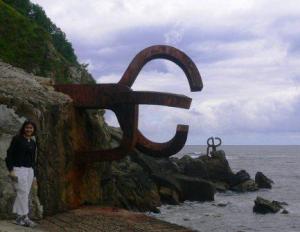
San Sebastian 2      Santander Bilbao

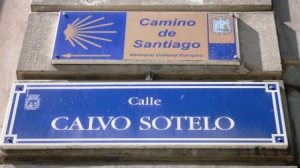
One of the fascinating things about this region is it’s in the path of the Camino de Santiago – the Saint James Trail.  The Camino de Santiago is a pilgrimage made by the followers and believers of St. James.  People walk from Roncesvalles in Navarra to Santiago de Compostela in Galicia to visit and honor the remains of the Apostle St. James, buried at the Cathedral.  People take about 1 month to walk the whole trail, about 800kms, staying in posadas or places specially designated for the pilgrims. 

Walter and I were taken by the Camino and its pilgrims.  The scallop shell is the symbol of the Camino and you can see tiles marking the way in many of the cities we visited.  Partly because of the religious significance and partly because the adventure and our love for Spain and travel, Walter and I decided we would definitely make the Camino de Santiago, specially on a Holy Compostellan Year , which is whenever July 25 falls on a Sunday.  I just learned this will be NEXT YEAR, in 2010. 
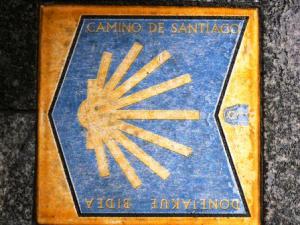
Camino SAntiago 1    Camino SAntiago 2   Camino Santiago 3

On this year, I was told you’re given a “passport” that is stamped at several intervals to testify you’re indeed a pilgrim doing the trail.  When you arrive at the Cathedral in Santiago, you get the final stamp and your country of origin is mentioned during the daily mass at noon to bless and celebrate the pilgrims.  I really want to do that!!!!

And what does this have to do with food, you might be asking yourself?  Isn’t this a blog about vegetarian food???  

When watching my other favorite Spanish cooking and traveling show, Spain on the Road Again with Mario Batali and Gwenyth Paltrow, they mentioned how these Empanadas Gallegas were super popular by the pilgrims because they are very portable, they are very nutritious, they keep well without refrigeration and best of all delicious.  I just have always seen them in the Spanish panaderías here in Puerto Rico since forever, but have not had one in many years because they’re made mostly with tuna or chorizo…

So in honor of our upcoming trip to the Camino de Santiago, here’s my interpretation of an Empanada Gallega…


 Empanada Gallega

 GALICIAN EMPANADA / EMPANADA GALLEGA

1 sheet of puffed pastry, thawed on the counter for 30 minutes or in the fridge overnight
1 medium onion, sliced thinly
About ½ cup of TuNo soy-based product
1 tsp of tomato paste
1 garlic clove, minced
About 3 tbs of white wine or apple cider vinegar
1 tsp of Spanish pimentón
 5-6 Spanish olives stuffed with pimientos – sliced
1 bay leaf
Spanish Olive oil
Salt and Pepper to taste
About 1 tbs of whole wheat breadcrumbs
1 tbs of buttermilk or butter
Some bench flour – whole wheat preferably…


  1. Pre-heat oven to 375 F.
  2. In a small skillet over medium heat, add olive oil, onions and garlic.  Sauté for a few minutes until the onions start to soften and become a bit translucent.  Add the bay leaf to season.
  3. Add the crumbled pieces of TuNo and let it cook all together.  TuNo usually comes frozen, but you will not need to defrost it for this application.  Just let it defrost and melt in the pan with the onions. 
  4. Add the tomato paste, pimentón and the vinegar to the pan and let it combine well.  Add the olives and season with salt and pepper.  Let it cook for a few minutes and turn the stove off.  Set it aside to cool off for while you work with the dough.
  5. I cover the baking sheet of my toaster oven using a layer of aluminum foil and then parchment to ease up on the cleaning. 
  6. The puffed pastry usually comes folded in thirds, I don’t even bother to unfold it… dust it with a little bit of whole-wheat flour, cut it into two halves and flatten it out using a rolling pin.  Roll the two halves of puff pastry one a bit larger than the other… Place the larger half onto the baking sheet lined with parchment. 
  7. Add the breadcrumbs to the onion/TuNo mixture and remove the bay leaf.  Transfer the mixture carefully onto the puff pastry leaving about a ½ inch border all the way around.  Try to flatten the mixture a bit to make it an even layer. 
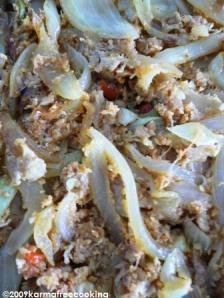
  8. Empanada Gallega - Relleno
  9. Cover the filling with the smaller layer of rolled pastry.  Bring the edges of the puff pastry together folding one onto the other and securing by pinching with the tines of a fork.
  10. Brush the top layer of pastry with the melted butter or buttermilk, whichever you have on hand.  Make 2 slits on the top for the steam to escape.
  11. Bake in the oven for about 30 minutes, until the pastry is golden brown and smells delicious.
  12. Take it out of the oven carefully and out of the baking sheet to cool off a bit into a cutting board.

   I just hope we can find a vegetarian version of this empanada like this along the Santiago Trail… what do you think??
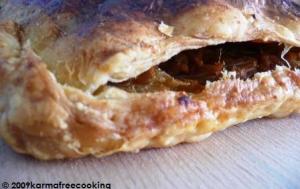
 

Empanada Gallega 1

Getting a peak inside the filling…  yum!