Archive | Puerto Rican delicacies RSS feed for this section

Tofu-chón

2 Dec

Here in Puerto Rico is very typical to celebrate Xmas with pork… or as we say in Spanish, Lechón.  People trying to be more health conscious have then tried to take the flavors used in making a lechón but with turkey, calling it Pavo-chón – pavo from the Spanish for turkey and chón… well, you get the drift.

But being vegetarian, I’ve lived without lechón or pavo for about 10 years of my life now.  But I have not been vegetarian all my life, so even though I do not miss eating the actual meat, I do still get allured by the smells of the seasonings and what I remember they taste like.  I am sure I am not the only one that feels that way… there’s no need to be ashamed of it.

So if people found a way to season turkey to make it taste like lechón, why can’t we do the same with TOFU??


I say what the heck!! Let’s give it a try… and the thing worked.  So now you can have your tastes of the past, but with a greater consciousness that you will not be damaging the lives of other living creatures in the process.  Isn’t that the true meaning of Christmas and the Holidays??
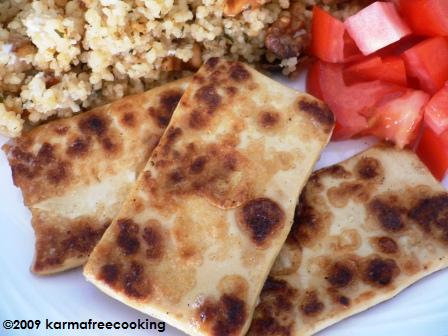
 

TOFU-CHÓN

1 block of extra-firm tofu, drained
About ¼ cup of adobo – or you can make your own blend, like I show you here
1 cup of Water or vegetable broth
The juice of 1 lemon
Canola oil Spray
 
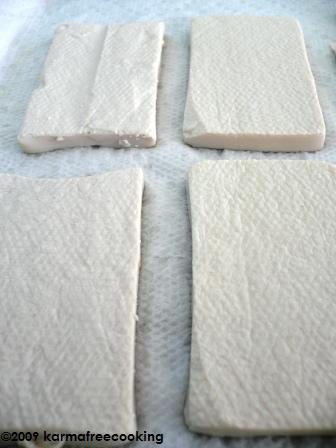
  1. After draining the tofu block, cut it into ½” thick slices.  Place them on top of a sheet pan with about 3-4 layers of paper towels.  Cover the tofu slices with 3-4 additional layers of paper towels and place another sheet pan on top.  Weigh the tofu slices down with a few heavy books for about 1 hour.
  2. After the hour has elapsed, I usually take the top layer of paper towel and squeeze out as much liquid as possible from it.  Take the sheet pan that used to be on top and now make this your bottom sheet pan, place the squeezed paper towel your bottom layer of paper towel, transfer the tofu slices into this new bottom, squeeze as much water as possible from the former bottom layer of paper towels, place now on top of the tofu, place the former bottom sheet pan on top of the paper towels and weigh again with heavy books for about an extra 30 minutes or so.  I like to really press the tofu dry…
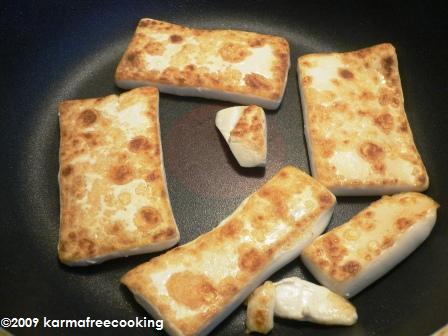
  3. In a medium skillet sprayed with canola oil spray over medium heat, we’ll bring some color to the tofu slices. We do not want to sear them fully, but doing this will help the marinating liquid penetrate even more…    
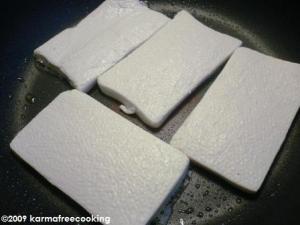
  4. While we’re heating the tofu slices, we prepare the marinade… mix together in a bowl you can cover well the water, the juice of the lemon and the adobo mixture.   Place the tofu slices that have been heated a bit and gotten some color on the skillet in de bowl with the marinade.  Cover the bowl and let the tofu marinate for about 4-6 hours.  Do not do this overnight because they might get too salty… 
  5. After the marinating time has elapsed, take the skillet again, spray again with canola oil and place over medium high heat.  Pat dry the tofu slices and place on skillet.  Sear until you get a nice brown color on the tofu.
 

You can serve this over rice… a nice rice with corn (arroz con maiz) or even a rice with pigeon peas (arroz con gandules) would be good local typical combinations.  This time around, I actually had it with a goat cheese couscous with walnuts, which is certainly not the traditional accompaniment.  I also used these inside a Tortilla Casserole I will be sharing with you soon enough…

Adobo

30 Nov

I’ve come to believe that food tastes as good as the seasonings you put on it…

A lot of people steer away from vegetarian food because they believe it tastes bland or boring.  But it all comes down to the seasonings.  And in Latin cooking, ADOBO is a key part of the seasoning.  Adobo is used mostly on meats, poultry or fish, but vegetarian cooking can also benefit from a sprinkling of this delicious seasoning.

For Puerto Ricans, adobo is a mixture of various dry spices mixed together with salt.  Anything we cook, we first sprinkle some adobo on, wait for a few minutes for the flavorings to penetrate and then cook.  The typical flavorings in an adobo mix are salt, pepper, garlic powder, onion powder and dried oregano.  There are versions that may include also cumin, paprika or even dehydrated lemon pieces.  You need to be cautious to look for a brand that does not include chemicals or additives, like MSG… but most good brands do not include it. 


You can find adobo in any supermarket here in Puerto Rico – it’s a staple in our cooking.  But you can certainly find it also in the Latin section of your supermarket if you live outside of Puerto Rico.  But if you can’t find adobo already packaged, it’s something fairly easy to make and store in your cupboard… here’s how:

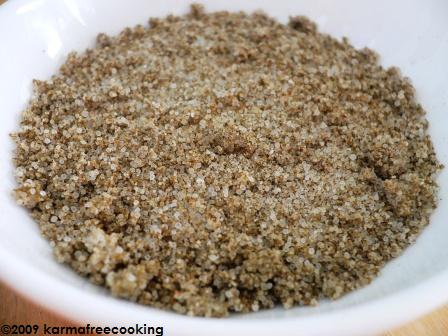
ADOBO

1/3 cup Kosher or Sea Salt
2 tbs Garlic Powder
2 tbs Dried Oregano
1 tbs Onion Powder
½  tbs Coarsely Ground Pepper
  1. Mix all this together and sprinkle on your favorite food to season.
  2. Keep it in a dry, cool place to avoid the salt from clumping. 

I use adobo to season my Potatoes a la Angie, to season my Portobello Burgers, and to give flavor to roasted potatoes.  You can also sprinkle it on top of any frozen veggie burgers so you can taste how the flavor greatly improves…

Sofrito 102

9 Nov

I have already shared with you my basic recipe for SOFRITO 101 here.  It’s a basis of flavor for most recipes I make… including onions, peppers and garlic.  However, there might be some variations.

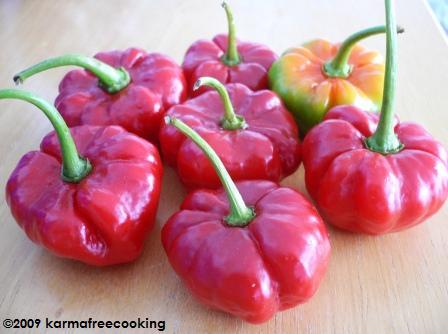
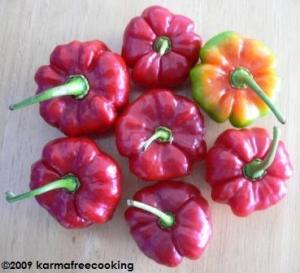
You could also add into the mix some AJÍ DULCES… these are local sweet peppers.  These are grown by my aunt in her backyard.  Very similar to these are AJÍ PICANTES, or spicy little peppers.  As soon as I learn their names in English, I will share with you.

 aji dulces 2

Ají Dulces give an interesting dimension to your Sofrito… plus, some color when they turn red.  They’re not as sweet as a bell pepper, but they’re not spicy like a jalapeno or Serrano chile.  It’s something in between, but really nice.

 I personally am allergic to the heat of the spicy ones.  And sometimes when you buy them in the store you need to be careful because they might mix the sweet and the spicy kind.  That’s why I only use the ones from my aunt’s backyard.  Because if I ever touch the seeds of the spicy ones my hands are burning for days.

Add some Aji Dulces to your sofrito next time… and if you ever get bitten by the sting of an ají picante, just dunk your hands in tequila… a trick I learned the hard way.

aji dulces 1


Breadfruit Tostones

29 Apr

This is another of the recipes related to my Foodbuzz’s 24,24,24 April event… A Very Veggie Experiment.


Tostones in Puerto Rico are typically made from plantains… but you can make tostones also out of Breadfruits.  We call them PANA in Spanish. 

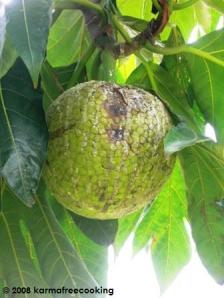
Breadfruits are very polarizing – people either love them or they hate them.  For example, my dad does not eat them at all because in Cuba, breadfruit was given as food to the pigs.  And in his mind, he could not bring himself to eat pig’s food.  However, my grandpa on my mom’s side LOVED them.  He would always make a big deal when one of the breadfruits would fall from the tree behind the house.

It’s very typical to eat breadfruit boiled in salted water, just like you would boil potatoes.  But it’s not a root vegetable… it’s a fruit that grows on a tree.  It’s weird because you treat them in the culinary sense just like you would other VIANDAS or root vegetables- potatoes, sweet potatoes, yucca, malangas, etc.  I guess it’s the same way as eating green bananas boiled too.  It is very traditional to eat them with codfish in a dish called serenata.  Now that we’re vegetarians, we enjoy them with some Tuno Antipasto on top, amongst many other preparations.


                                          pana-tree         pana

This time around we’re making them fried.  With the breadfruit tree behind my grandma’s house in full bloom and splendor,  I decided to expose Mariví’s kids to breadfruit.               

 tostones-pana

BREADFRUIT TOSTONES

½ breadfruit
2 garlic cloves
Kosher Salt to taste
Canola Oil for frying


You make breadfruit tostones the same way you make regular tostones…

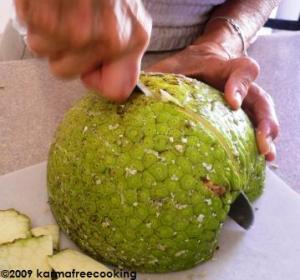
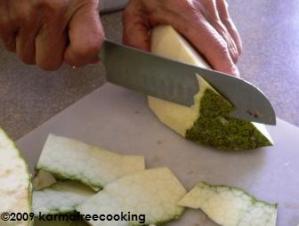
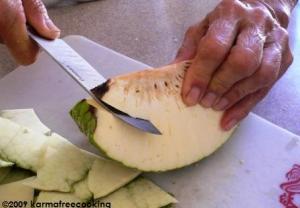
  1. First you cut the breadfruit in half and then into wedges.  Peel it and remove the center where the spongy part and seeds are.  Wash the wedges well under running water to take away any “mancha” or stickiness it may have.  Because the best breadfruits for tostones are still pretty “green” or unripe.
  2. pelando-panas-3        pelar-panas-1   pelando-panas-2
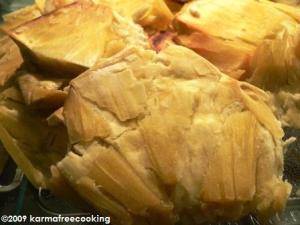
  3. Cut them into smaller pieces and fry them in canola oil under medium heat until they’re cooked inside, but not really golden.
  4. friendo-panas
  5. Flatten the breadfruit pieces using a tostonera or two plates like I use here.
  6. If you’re making them to eat right away, fry them again in the same canola oil until they’re crispy and golden brown.
  7. Sprinkle them with garlic salt and enjoy right away.


If you want to make a whole batch to freeze and save for a later time,

  1. Fry them only once, smash them and wait until they cool off a bit.  Store them in a Ziploc bag in your freezer. 
  2. tostones-de-pana This is how they look fried only once and flattened…  a bit pale, no??
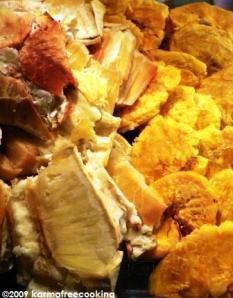
  3. When you’re ready to fry them the second time,  defrost them in salted garlicky water and fry them again right before eating them.  Make sure you pat the dry a bit before frying so the oil does not splatter.

 tostones-pana-y-platano  These are breadfruit and regular plantain tostones side by side so you can notice the differences…

These breadfruit tostones were a complete hit!!!  Everyone wanted to be in the kitchen with me when I fried them and everyone gobbled them up.  Even the little ones went for the tostones first before they started on the fixed-up mac and cheese.

diego-eating

Asparagus Party Sandwiches

27 Apr

Yesterday, I participated in the Foodbuzz 24,24,24 event for April…  I cooked a dinner for my friend Mariví and her 4 oldest kids to get them to inadvertently try new foods and new flavors.   I titled it A Very Veggie Experiment…

The first dish of the night was these asparagus sandwiches…  I still can remember the first time I ate an asparagus sandwich at a birthday party.  I just ate it thinking it was a regular “sandwichito de mezcla” just rolled into a different shape and loved it.  It was not after I had eaten about 10 of these little sandwiches that someone told me it was asparagus.  I was hooked for life… 

452a7d7ad81542b8

I knew Mariví and her kids would be surprised about liking them too… 


 sand-esparragos-3

 ASPARAGUS PARTY SANDWICHES

1 jar of asparagus spears
¼ cup of egg-less mayonnaise
Garlic salt to season to taste
1 packet of whole-wheat sandwich bread


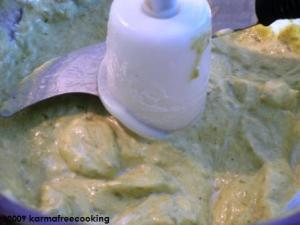
  1. In the bowl of a food processor combine the asparagus, egg-less mayonnaise and the garlic salt.  Pulse until it becomes a loose paste.  Set aside.
  2. mezcla-esparragos
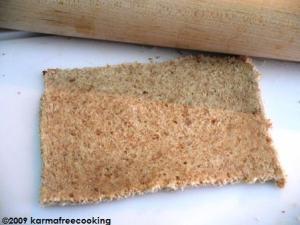
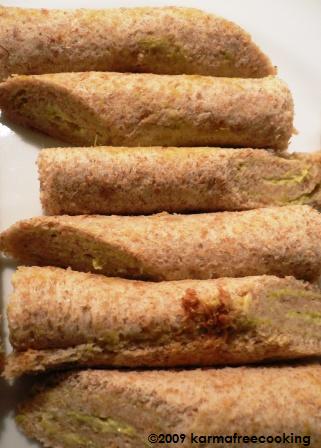
  3. To make these rolled sandwiches, we need to flatten the bread slices with a rolling pin.  Just take off the crusts of the bread slices and flatten them one by one.
  4. sand-esparragos-2
  5. Spread the asparagus mixture on top of each flattened slice of bread.   I leave the farthest edge without asparagus mixture because it will spread onto the edge when you roll the bread.
  6. sand-esparragos-1
  7. Starting on the straighter edge of the bread, roll the bread carefully onto itself until you create a little roll of bread.  Place the rolls seam side down so they will not unravel.
  8. I place them in a pyrex lined with moistened paper towels and place them in the fridge to finish setting.  Refrigerate about 1 hour to 1 day before serving. 

Sometimes people place a whole asparagus spear in the center and then roll the bread around it, but because I knew these guys are finicky, I just made a puree out of the ingredients to avoid any apprehension before they tasted them.


Both Ignacio and Diego, Mariví’s oldest kids, smelled the rolls before putting them in their mouths… so typical of a finicky kid!!!  Ignacio, Diego, Kamila and Mariví all loved them.  They were all trying to figure out what was in them.  Ignacio and Diego had about 4 each and even told me they would love to have them again…

This was Ignacio’s face when he learned these were made from asparagus… HUH?!?!?

ignacio-esparragos