Archive | basics RSS feed for this section

Annatto Oil (Achiote)

22 Dec

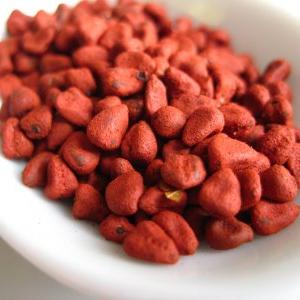
 I do not use this in my regular cooking, but cooking with Annatto Oil is extremely popular to make very traditional Puerto Rican dishes like Arroz con Gandules and Pasteles.  It’s easy to make and keeps well…


ANNATTO OIL (ACHIOTE)

1 Cup Vegetable Cooking Oil
½ Cup of Achiote (annatto) Seeds

  1. Heat the oil in a saucepan over medium heat, and when it gets hot, turn down the heat to low, and add the annatto seeds.
  2. Stir every now and then, for about 5 minutes, or until the oil turns a bright orange.
  3. Cool the annatto oil completely and strain through a paper lined sieve, into a glass container.  At the yoga center, they have a sieve specially for the achiote oil.
  4. Store covered in a cool dry place.

Be careful when cooking with it because the oil stains like crazy…


Be wary of pretty Passion Fruits…

5 Dec

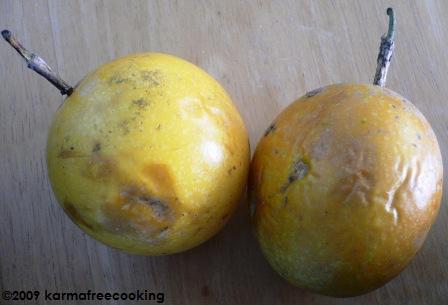
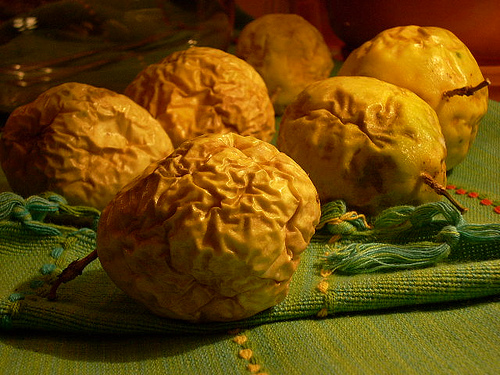
When you go to the market, you usually seek out the prettiest produce you can find… however that principle does not apply to passion fruits.

The thing is that when a passion fruit’s outside skin is pretty and smooth – the passion fruit is still unripe.  But when the fruit gets all wrinkled and “old-looking” that’s when it is on point.  Something very similar also happens with sweet ripe plantains.

Photo by omheart on Flickr

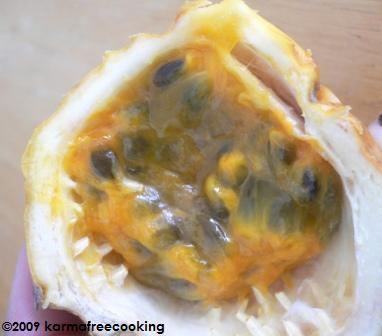
The passion fruits we have here in Puerto Rico are yellow, quite different from the ones I usually see in the media or internet.  Just like any fruit, they’re usually sweet but they have a tart undertone.  But if you get a tarty one, you can sweeten it very quickly adding some brown sugar or honey.  The pulp inside is laced with lots of small black seeds that you can eat together with the pulp.  No need to strain them at all…

Just take your crinkly and ugly-looking passion fruit, cut it in half and scoop out the pulp.  You can eat the pulp right from the shell, or use the pulp alone in juices and desserts.  I personally like a lot to make my own Passion fruit Yogurt.


Adobo

30 Nov

I’ve come to believe that food tastes as good as the seasonings you put on it…

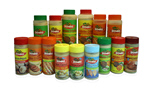
A lot of people steer away from vegetarian food because they believe it tastes bland or boring.  But it all comes down to the seasonings.  And in Latin cooking, ADOBO is a key part of the seasoning.  Adobo is used mostly on meats, poultry or fish, but vegetarian cooking can also benefit from a sprinkling of this delicious seasoning.

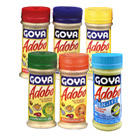
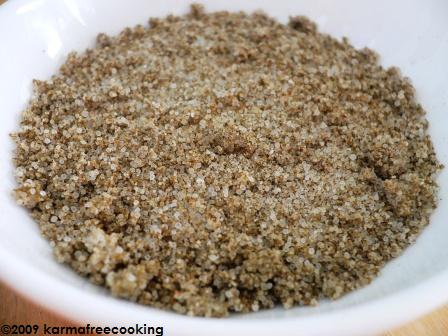
For Puerto Ricans, adobo is a mixture of various dry spices mixed together with salt.  Anything we cook, we first sprinkle some adobo on, wait for a few minutes for the flavorings to penetrate and then cook.  The typical flavorings in an adobo mix are salt, pepper, garlic powder, onion powder and dried oregano.  There are versions that may include also cumin, paprika or even dehydrated lemon pieces.  You need to be cautious to look for a brand that does not include chemicals or additives, like MSG… but most good brands do not include it. 


You can find adobo in any supermarket here in Puerto Rico – it’s a staple in our cooking.  But you can certainly find it also in the Latin section of your supermarket if you live outside of Puerto Rico.  But if you can’t find adobo already packaged, it’s something fairly easy to make and store in your cupboard… here’s how:

ADOBO

1/3 cup Kosher or Sea Salt
2 tbs Garlic Powder
2 tbs Dried Oregano
1 tbs Onion Powder
½  tbs Coarsely Ground Pepper
  1. Mix all this together and sprinkle on your favorite food to season.
  2. Keep it in a dry, cool place to avoid the salt from clumping. 

I use adobo to season my Potatoes a la Angie, to season my Portobello Burgers, and to give flavor to roasted potatoes.  You can also sprinkle it on top of any frozen veggie burgers so you can taste how the flavor greatly improves…

Sofrito 102

9 Nov

I have already shared with you my basic recipe for SOFRITO 101 here.  It’s a basis of flavor for most recipes I make… including onions, peppers and garlic.  However, there might be some variations.

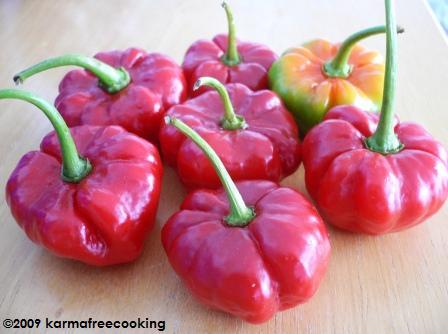
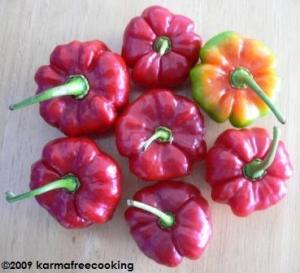
You could also add into the mix some AJÍ DULCES… these are local sweet peppers.  These are grown by my aunt in her backyard.  Very similar to these are AJÍ PICANTES, or spicy little peppers.  As soon as I learn their names in English, I will share with you.

 aji dulces 2

Ají Dulces give an interesting dimension to your Sofrito… plus, some color when they turn red.  They’re not as sweet as a bell pepper, but they’re not spicy like a jalapeno or Serrano chile.  It’s something in between, but really nice.

 I personally am allergic to the heat of the spicy ones.  And sometimes when you buy them in the store you need to be careful because they might mix the sweet and the spicy kind.  That’s why I only use the ones from my aunt’s backyard.  Because if I ever touch the seeds of the spicy ones my hands are burning for days.

Add some Aji Dulces to your sofrito next time… and if you ever get bitten by the sting of an ají picante, just dunk your hands in tequila… a trick I learned the hard way.

aji dulces 1


Provençal Rice

21 Sep

With my stove out of commission for a few weeks, I resorted to my trusted friend the rice cooker to help me out in the kitchen.

This is a dish I used to order a lot as accompaniment when I used to eat at La Parrilla Argentina, a “fast food” joint found here in PR in mall food courts.  Never been to Argentina, it’s still in my to-travel list, but apparently this is a popular side dish too.  The name is “french” but that’s the way the named it at La Parrilla, I guess because it uses parsley and garlic.

It’s easy to make, delicious and you don’t need to occupy a stove range when making it.  I usually set the rice cooker and then go off to take a shower, meditate, and do other stuff without having to tend to the food itself.  Rice cookers are the best invention ever…

 Arroz Provencal

PROVENÇAL RICE

1 cup of whole grain, brown Texmati rice (I use the measure in my rice cooker… so I am not completely sure if my “cup” is the same size as yours)
1 tbs sofrito or  2 cloves of garlic, chopped
¼ cup minced flat leaf Italian parsley
½ cup grated Parmesan cheese
Water
Salt
Olive oil


  1. Measure rice and wash well.
  2. Place in the rice cooker and fill with rice with about ¼ more than the rice cooker lines say.  Brown Texmati rice needs a bit more water than regular white rice.
  3. Add the sofrito, salt and olive oil to taste. Mix it all in a bit.  I usually pour about 1 tsp to 2 tsp of oil.  I learned to do this by “eyeballing” it.  Cover and turn the rice cooker on.
  4. In my rice cooker, when the chime goes off, I still need to let it rest for about 10-15 more minutes to make sure the steam finish cooking the rice.  After this time has passed, fluff the rice with a fork and stir in the parsley and the parmesan cheese.
  5. Let the flavors meld for about 5-10 minutes more and serve.


I had this rice with a tomato and avocado salad and french fries.  YUM!!