Archive | main courses RSS feed for this section

Give new life to your recipes…

30 Aug

In the spirit of reusing, reducing and recycling I wanted to share with you some of my recipes and how do I use them and re-use them in other preparations. As a very wise Alton Brown once said in one of his TV shows – “There is no room in my kitchen for uni-taskers!!!” I think Alton was referring more to kitchen utensils and gadgets than recipes… but you get my drift.

In my everyday life I cook and eat most everything I post here in this blog… and when making a recipe, I sometimes have leftovers. Sometimes… too much leftovers for just one person to chow down. I personally try as much as possible to cook just for now and maybe, to have something for tomorrow… but in my ideal world, I would cook for just now and make everything fresh right before I eat it.

Something I learned from the Yoga Center is that if you’re using leftovers, at least combine them with fresh stuff to give the leftovers a new lease on life. You see… leftovers have lost some of its nutritional value because it’s been a while since they’ve been cooked. This is the exact same reason why I discourage the consumption of frozen prepared meals or that convenient idea of cooking one day for the whole week and then just reheat and eat it whenever you’re hungry. If it’s something you do occasionally… it’s not that bad, but doing it as a system, well, in my opinion, you’re always eating old food that’s not as healthy and nutritious as when it was originally cooked.

So here are my ideas to use recipes the next day converting them into new dishes altogether. This way, we use our leftovers right away and do not accumulate lots if little containers in our fridge. OK??

Whenever I make Bruschetta Mix, I eat some as a snack or appetizer, but I always try to make more than I think I’ll need and eat with pasta.

p1010884.jpg

When I have leftover mashed potatoes – or just leftover boiled potatoes – this is a perfect opportunity to create a pastelón with it. Cook a filling made of veggies or soy protein and top with your favorite cheese…. And there you have a complete meal.

You are familiar already with my Meyer Lemon Thyme Granita recipe… if you do not want to eat it all as a granita, what I have done in the past is save pieces of the leftover frozen simple syrup in a freezer bag. And every time I want to create a fruit smoothie I supplement the ice/juice in my smoothie with a few pieces of the frozen lemon thyme mixture. The end result is a great tangy taste to your favorite morning drink… My suggestion, add a few pieces to a BB Shake – banana, blueberries, meyer lemon, thyme… YUM!!!

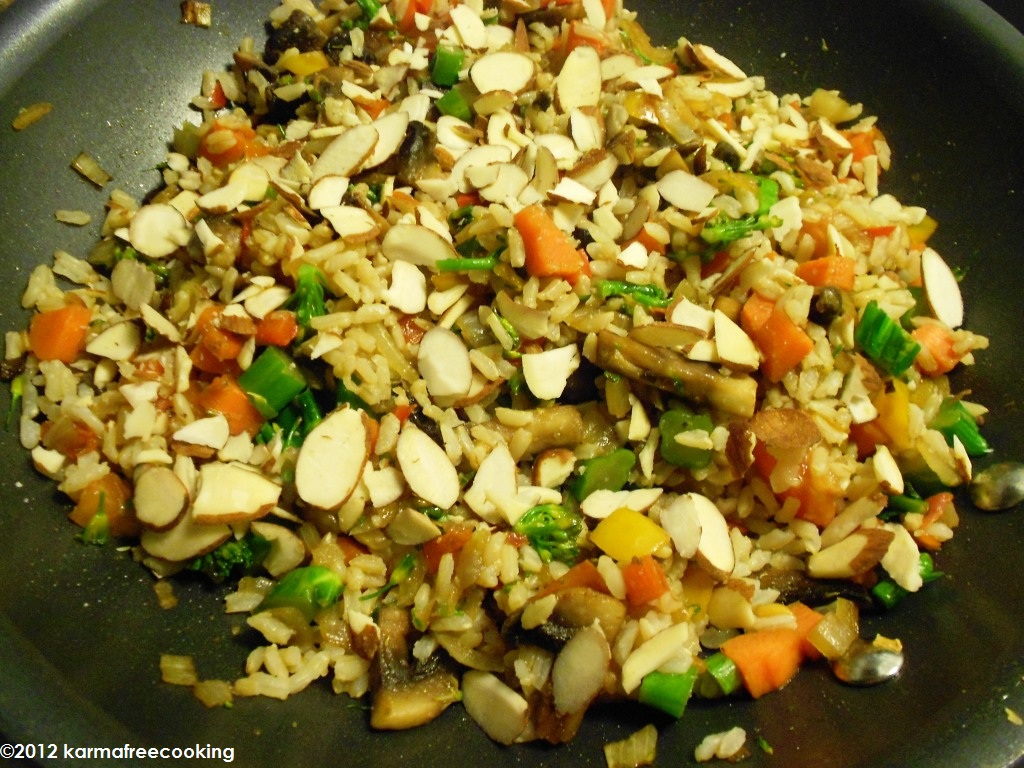
Anytime you have leftover rice, it’s easy to give it new life by adding a few delicious odds and ends you might have in your fridge. Just make your very own version of Millionaire Rice, the one that would cost you and arm and a leg if you had to go and buy so many ingredients to make, but it’s cinch just using up whatever you have cluttering up you fridge. Or make some Rice with Corn.  And if after making rice you still end up with a leftover, you can revive it once again into a Stuffed Pepper.

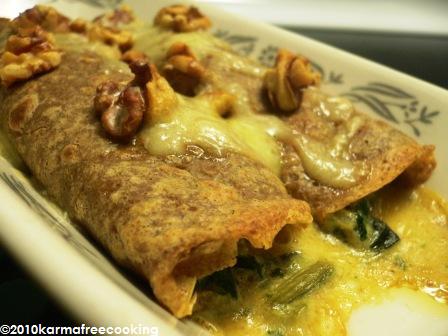
Cooked greens is not something I grew up with… eating spinach, for example, was an acquired taste I developed well into adulthood. If you make a version of creamed spinach to fill a spinach crepe… you can use any leftover mix into a Spinach Canelloni with the same crepes but adding some ricotta cheese to the filling and topping with tomato sauce. Add some more flour and create delicious Spinach Croquetas. You could even use it to fill a traditional Spinach Lasagna.
I hope you have learned a few tricks on how to give more mileage to the recipes you already know and how to use similar ingredients and flavors to enhance a brand new dish. This is kinda taking the semi-homemade concept to your leftovers.

What other magical recipes do you create based on your leftovers??? I want to learn something from you guys too!!!
Sopa Paraguaya vs. Chipaguazú

13 Aug

A while ago I shared with you all my friend’s Rosani recipe for Sopa Paraguaya, or Paraguayan Soup… which is really not a soup. Sopa Paraguaya is a sort of corn pudding made from cornmeal and cheese.

When I visited Paraguay earlier this year, the first thing I wanted to taste was a Sopa Paraguaya made in Paraguay by Paraguayans. I always want to taste how the original versions taste and how they compare to the versions we create at home. I told you once that what I call Sopa Paraguaya is called Chipaguazú over in Paraguay. Well, not exactly true…

There are two dishes made in Paraguay – Sopa Paraguaya and Chipaguazú. They are different from each other…

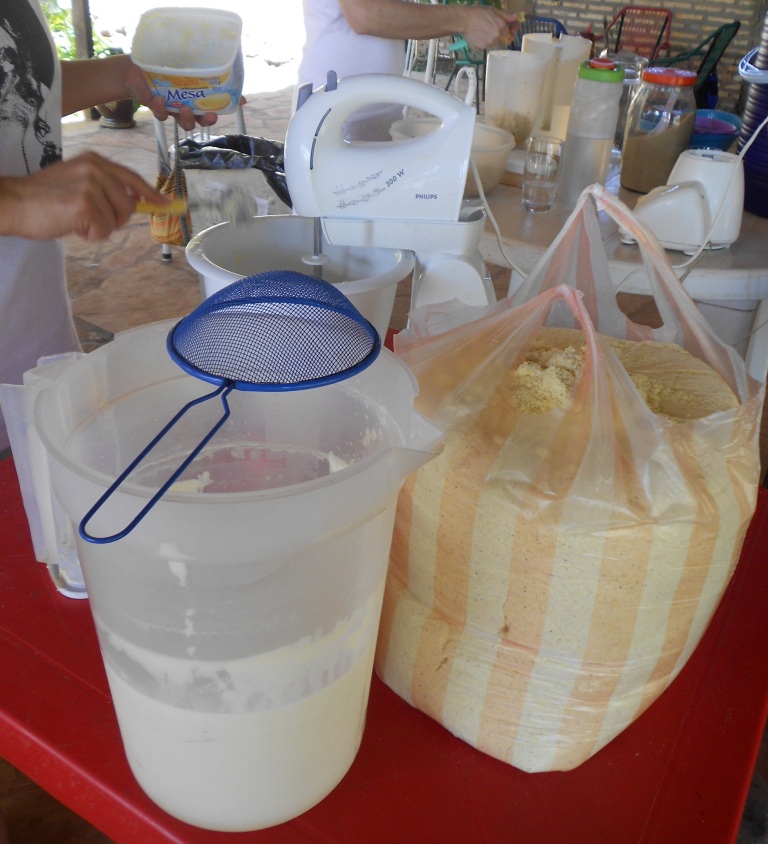
Thanks to my friend Ester… a whole crew went to her house one day to cook for the whole yoga group, but also to cook some soy and yuca fritters for a shelter of homeless boys and girls. She was gracious enough to cook to cook both Sopa Paraguaya and Chipaguazú side by side so that I could see firsthand how the recipes differ from each other.

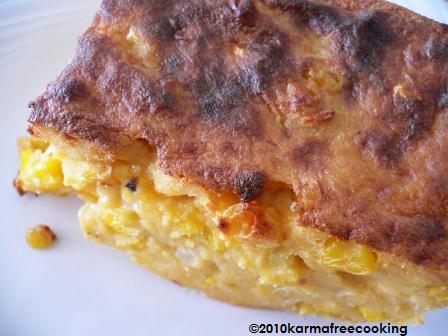
They’re both made from corn… they’re both baked. That’s about where the similarities end.

Sopa Paraguaya


  • It’s made from cornmeal flour mixed for a long time with milk, butter, baking powder, salt and anise seeds. The anise seeds are particular to the Sopa Paraguaya recipe.

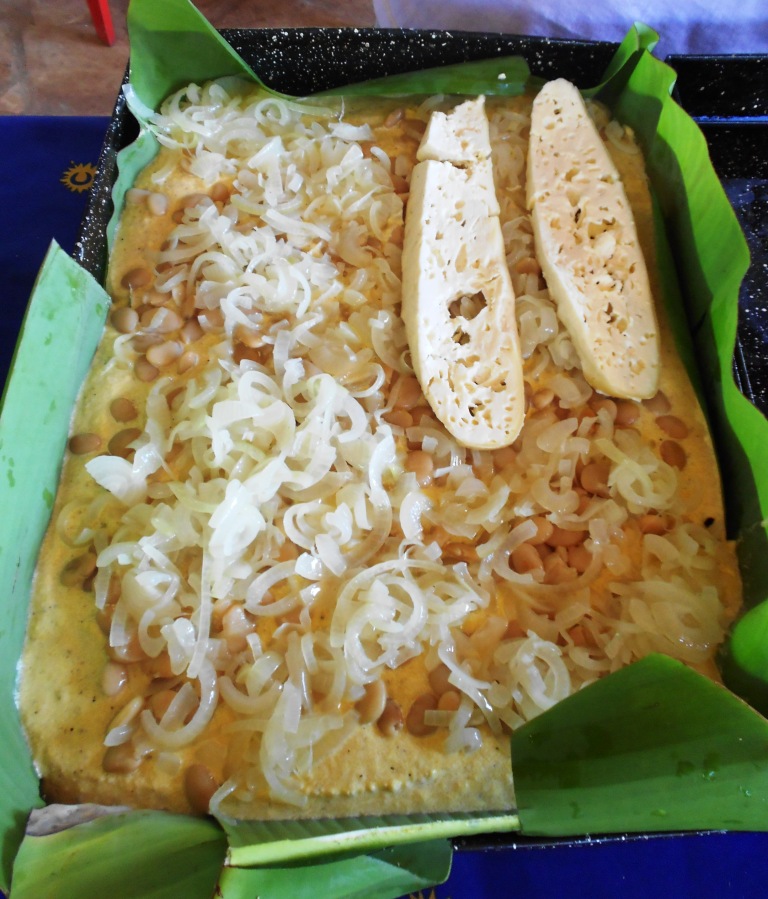
  • This yields a very smooth batter that is poured into a baking dish lined with banana leaves. You pour only ½ the batter and add cooked onions, Paraguay cheese and butter beans. When you pour the second half of batter, the filling gets sandwiched in between.


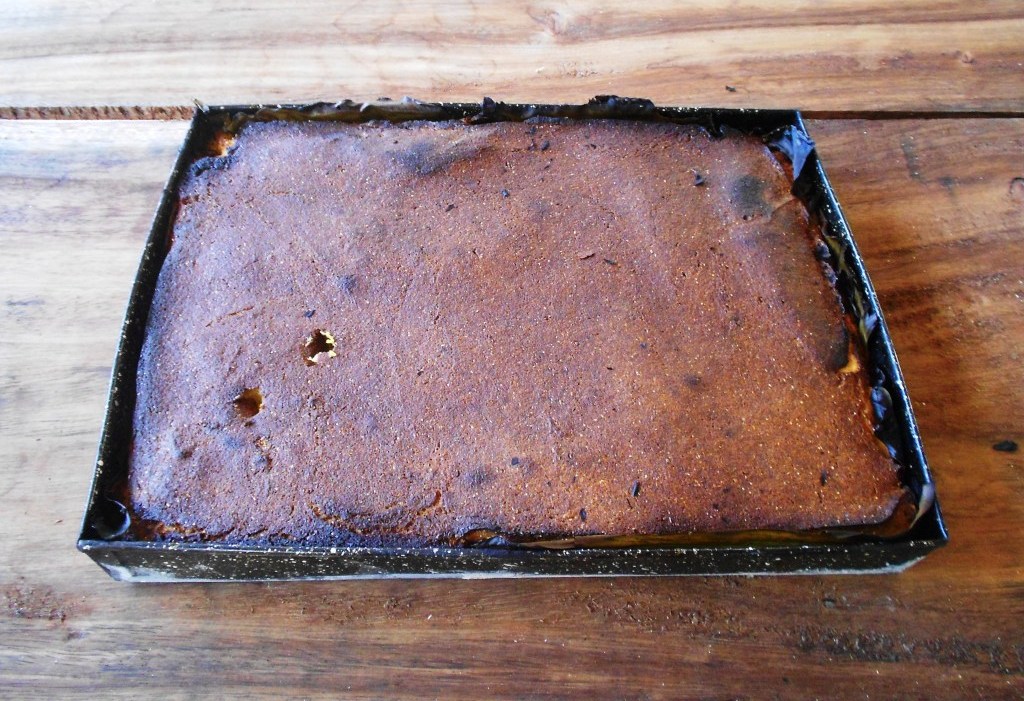
Chipaguazú

  • It’s made by grinding fresh corn kernels. These people usually grind them by hand. To the ground corn you add some milk, but not a lot, cooked onions and salt. No cheese!!!!


  • The corn batter is poured into a baking dish lined with banana or plantain leaves.

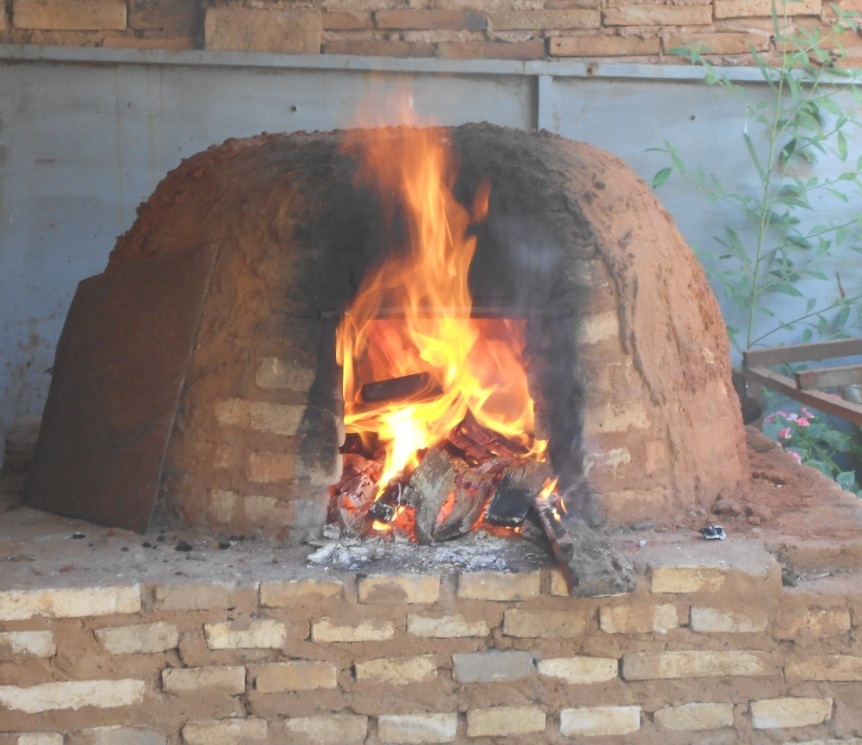
We baked them using a wood burning oven… I know my friends from Serious Eats Water Cooler would go crazy over that oven… I was dying to make some cool pizzas there!!!! 😉


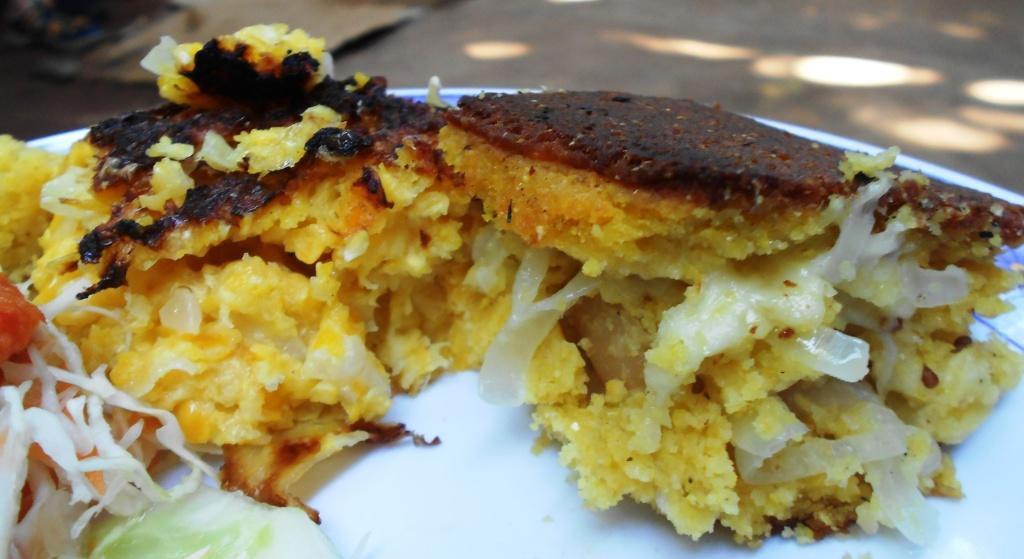
Here are both dishes after baking for about 30-45 minutes…  Chipaguazú is at the left and the Sopa Paraguaya is on the right.

The verdict… as delicious as these traditional recipes are, the Sopa Paraguaya we make here in Puerto Rico is actually my favorite!!! Maybe because it’s a hybrid of these two recipes. We use cornmeal that we cook a bit over the stove, add cooked onions, corn kernels and grated cheese to the batter. And in my humble opinion, I prefer our hybrid version to any of the originals. I think we have taken what’s great about each and combine it into one great dish.  I feel a bit like Tyler Florence with his TV show, Tyler’s Ultimate…

Even though Rosani now likes to now make Chipaguazú at the Yoga Center, I will continue to make our local version of Sopa Paraguaya because to me, it tastes THE BEST!!!!


Have you ever had traditional Sopa Paraguaya or Chipaguazú?? How does it compare to my original recipe???


Yuca Alcapurrias

6 Aug

When I traveled recently to Paraguay, we wanted to thank all the hospitality our Paraguayan friends showed towards us with a Puerto Rican dinner.  Well… almost Puerto Rican, because we had representation from every member of our group… a little from the Dominican Republic, a little from Brazil, a little that came from inspiration from the Coronel Oviedo market…  But amongst the dishes that were typical to Puerto Rico were our alcapurrias.

With the copious amounts of yucca we had at our disposal in Paraguay, we had to make some sort of fritter with yucca and what’s a better example of a Puerto Rican fritter than an alcapurria. I have tried to share with all of you an alcapurria recipe for a long time now. But, I do not make alcapurrias all by myself at home. Usually, this is a group project and even though they’re not super difficult to make, it goes easier if the tasks are shared.

Alcapurrias are traditionally made with a masa made from ground plantain and yautía. Yuca is also very traditional, so we are not deviating too much from a very traditional recipe here. But instead of filling them with ground meat, we will be using mixed vegetables. You could also use a combination of mixed vegetables and textured vegetable protein to resemble more the ground meat filling. These are amongst the most iconic fritters you can find here in Puerto Rico… present in almost every celebration, especially in patron saint festivities and even at the Luquillo Beach kisokos and Loíza.

This recipe comes from Yazmín and Joel, who were the master alcapurria fryers. My title is more master alcapurria eater. The best thing is to make a bunch of these at one sitting… fry some to eat immediately and any left over, freeze them for later frying. As with any fritter, they’re best eaten immediately after frying or else, they get soggy. They’re so laborious that is not something that you can whip up whenever you get the craving. This takes time… you’re all under advisement.

Joel frying some mean alcapurrias in Paraguay

In Paraguay, we were lucky we had a whole team helping with making these alcapurrias, especially to grind the yuca manually. In Puerto Rico, we have the help of a Champion machine where we grind the yuca and the moisture is separated from the dry masa.  But if the task of grinding yuca blows your mind, at the stores they sell frozen masa for alcapurrias or pasteles, ready to go. I’ve never used them, but I believe the only thing you need to do is thaw it completely and squeeze it as dry as possible and season it, just like I teach you here…

YUCA ALCAPURRIAS

Ground raw yuca, about 5 lbs of yuca, pealed and washed well
10 cloves of garlic, mashed in a mortar/pestle or in the food processor
2 ½ tbs salt
¼ cup of annatto oil
 
Mixed Vegetables Filling
1 bag of frozen mixed vegetables, thawed
1 large onion, diced
½ cup of tomato sauce
1 tsp Garlic and Herbs seasoning
Salt and Pepper to taste
Olive Oil
 
Canola Oil for frying
  1.  If you have a manual grinder use that to grind the raw yuca. If you have a Kitchen Aid with the grinder attachment, use that. If you have a Champion machine, use that. If you prefer to purchase the masa frozen from the supermarket, that’s perfect too.

2. After the yuca is ground, you should wring out as much liquid from it as possible with a cotton cloth or towel. The idea is that the masa is as dry as possible. If you skip this step, the alcapurria might fall apart when frying and that’s no fun after you’ve worked so hard to make these.

3. Season the masa with the mashed garlic, salt and annatto oil. Set aside.

4.  To prepare the filling… in a large skillet, add a bit of olive oil and sauté the onions for a while under medium heat until they soften. Season with salt and pepper to taste.

5.  Add the mixed vegetables and the tomato sauce. Mix everything well. Season with salt, pepper, garlic and herbs. Mix once again. Cover the skillet to allow all the veggies to cook well and the flavor meld. Turn the stove off and allow the mixture to cool off a bit before we start assembling the alcapurrias.

6.  In another large skillet, add about 1 ½” of canola oil fro frying the alcapurrias in medium high heat. When the oil is ready, you can check it using the wooden spoon method, we start to prepare and fry the alcapurrias.

7.  With a large kitchen spoon, pour a spoonful of masa onto our other hand that’s covered with either wax paper, aluminium foil or even the traditional banana leaf. Spread the masa with the back of the spoon leaving some thicker borders. Add about 2 tbs of filling in the center of the masa and using the back of the larger spoon again work the thicker masa you left on the edges to cover over the filling. The idea is to surround the filling completely in masa. You might need to practice this a bit, and that’s perfectly OK.

8.  My friend Mai, places the waxpaper on top of a cutting board and folds the paper over so the masa envelops the filling. You almost always finish giving the alcapurria its form with the larger spoon.

9.  Helping yourself with the paper you have the alcapurria in, drop it carefully into the hot oil. Don’t touch it much as the masa is still soft and it can break open. With a spoon you can drizzle some of the hot oil over the alcapurria so the tp part that is not submerged in the hot oil can create a bit of a crust and make it less susceptible to the inadvertent touch of a spoon, etc. It’ll also make it easier to turn over later on.

10.  When the alcapurria is golden on the bottom side, turn it over so it can cook/fry on the other side. The oil should be hot, but not too hot to allow the masa to cook through. If the oil is too hot, it will get hard on the outside but the masa will remain raw. Not good… This is especially important if you’re cooking an alcapurria that has been frozen.

11.  When its golden brown all over, take it out of the oil with a slotted spoon and place it to drain the excess oil on top of paper towels.

12.  You can fry as many alcapurrias you can fit comfortably in your skillet. Don’t try to overcrowd the skillet so they do not fall apart when they’re just put into the oil. Two to three per skillet is the perfect amount. When you get the swing of it, you’ll become like an alcapurria-making machine. Keep on making alcapurrias until you ran out of masa and/or filling.

My mom organizing alcapurrias on some paper towels…

13.  Allow the alcapurrias to cool off for about 15 minutes before digging into them. This is a fried food after all and the insides get very hot and steamy. If you want, you could cut them open in half to allow them to cool off a bit faster.

To freeze the alcapurrias, all you need to do is to cut pieces of waxed paper to separate each alcapurria and place them one next to the other in a resalable zipped plastic bag. This way, when you get the alcapurria craving, you take one out and fry them or bake them in the oven, which turn out pretty good indeed. It’s the same principle as when we make tostones or soy meatballs ahead of time and freeze them.

Frozen alcapurrias stored in a freezer zipper bag

This is how a frozen alcapurria will look like… you can bake in an oven or fry.

I hope you like alcapurrias as much as Puerto Ricans love them. These alcapurrias as vegetarian, but taste just as traditional as any alcapurria made in Luquillo, Loíza, any patron saint festivity or school verbena fair.

Ryan Lochte’s Open Dinner Invitation…

3 Aug

Ryan Lochte is one of the hotties in the USA Swimming team… he should need no introduction by now, as he has been one of the faces of the London 2012 Olympics. And with all the coverage of the Olympics I have been watching, you get to know these athletes in more ways than you ever imagined.


I learned yesterday that Ryan’s mom is CUBAN!!!! And that Ryan looooves his Cuban foods fix – Bistec Empanizado, Ropa Vieja and his favorites, croquetas. He was interviewed by Matt Lauer this morning in the Today Show and all I was thinking was how I would love to speak with him in Spanish and to invite him over to dinner…

Today Ryan celebrates his 28th birthday and has already finished his tour in London with his 5 medals – 2 Gold, 2 Silver and 1 Bronze – so I think it’s appropriate and good manners to invite him over to my house for a nice Birthday dinner. It’ll be vegetarian, but it’ll be delicious and lots of fun.

Here are a few ideas for the menu:

Eggplant Milanese

Spinach Croquetas

Tuno Antipasto

I know this is not Ropa Vieja, but I think he will like it!!!!

antipasto-1.jpg

With some rice and tostones on the side

So, in the spirit of a very cool video prepared by the USA Swim Team, I can only use Carly Rae Jepsen’s Summer anthem to extend Ryan the most proper invitation to dinner…

I’d trade my soul for a wish,
Pennies and dimes for a kiss
I wasn’t looking for this,
But now you’re in my way
 
Your stare was holdin’,
Ripped jeans, skin was showin’
Hot night, wind was blowin’
Where you think you’re going, baby?
 
Hey, I just met you,
And this is crazy,
But here’s my number,
So call me, maybe?
 
It’s hard to look right,
At you baby,
But here’s my number,
So call me, maybe?

Ryan??? Are you game??? Call me… 😉

Millionaire Rice

27 Jul

Once in a while I come up with these clean-your –fridge recipes, especially when I am about to go on a trip. I have an obsession to leave the fridge as clean as possible from all the fresh ingredients that most likely will spoil by the time I return. This is how most of my stuffed peppers and stuffed mushrooms recipes come about…

So lately, I’ve been trying to eat less cheese… I go in phases trying to do this because I know that I can abuse cheese if I am not careful. And cooking rice for me is a way to come up with dishes that do not rely on cheese as a garnish or flavoring agent. Although this dish can very well be enhanced by some cheese too… 😉

The “millionaire” term was coined by Carmen at the Yoga Center because in her version, she needs to buy lots of ingredients to make a very luscious rice. But in my case, I work with what I have in my fridge and/or pantry of what’s left-over from other recipes.

This is more a method than a recipe per sé… I will show you what I have added to my most recent version of “millionaire rice” but feel free to create your very own combination the next time you feel the need to clean-out-your-fridge, for a trip or just before a big trip to the market…


MILLIONAIRE RICE

2 cups of cooked brown rice
Broccoli, cut into small pieces
Carrots, chopped finely
Onions, diced
Red or Yellow Bell Peppers, diced
Mushrooms, diced
Almonds , sliced almonds work best
Olive Oil
Salt and Pepper to taste

I do not include amounts of ingredients, because this is about what you have available in your fridge…

  1. In a large skillet over medium heat, drizzle a small amount of olive oil and the diced onions, peppers and carrots. Cook them for a few minutes until they begin to soften.
  2. Add the mushrooms and broccoli pieces … Mix well so the flavors mix. Season with salt and pepper, or the garlic salt if you prefer. If you have a lid, cover the skillet and let the mushrooms and broccoli cook for a few minutes.
  3. Add the cooked rice to the skillet. Mix well and cover again. The steam in the skillet will soften the rice again if it’s hardened from being in the fridge. Allow cooking for a couple of minutes and add the almonds last. Tturn the stove off and leave it there for the residual heat to finish heating the rice, making it fluffy again.

This rice is a great side dish or even makes a great filling for stuffed peppers or stuffed tomatoes.