Archive | Puerto Rican delicacies RSS feed for this section

Rex Cream @ Isabela

9 Jul

A few weekends ago,  I went on a weekend trip with my friend Rosani to the beautiful town of Isabela, located in the northwest side of Puerto Rico.   Isabela is where my grandfather’s family is from. 

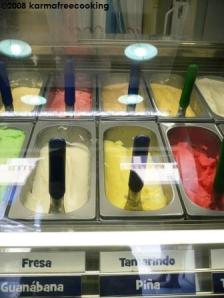
We loved visiting Isabela when I was younger – to visit the family and to go to the beach.  Isabela is a surfer town so there are beaches for everyone.  We stayed at a nice resort, but we are locals and do not like to be confined to resort world.  When we went into town, it was sooooooo hot that my body only craved cold things instead of lunch.  That’s when we discovered this little ice cream shoppe called Rex Cream.  The place is called and it’s located in a side street off the Plaza.  Their ice creams looked like gelatos, but they are all done with milk, cream or water.  None of them include eggs.  These were sooooooo good that we went there 2 days in a row.

Rosani ordered Coconut the first day and Corn the second.  Here’s a picture of the Corn ice cream.  Can you see the pieces of yellow corn?  They can garnish them with cinnamon if you like.  They tasted creamy, sweet and made of real stuff… none of that crappy artificial fillers.  We have a place in Lares that supposedly was where the corn ice cream was invented… Rosani’s palette says the Isabela version is way better.

I went for something tangier – Tamarind and Passion Fruit.  Mine were more like sorbets.  Super tangy, super refreshing…  I ordered Tamarind the first day but the second day I got a combo cup.

Every time we went, we walked over to the Plaza to sit on a shaded bench and eat our ice creams.  Unfortunately, the feeling was not too lasting because the heat would melt our ice creams really fast.  But they’re sooo good, it was all worth it.

If you’re ever in the Isabela area, stop by Rex Cream and have a delicious ice cream in my name…

Stuffed Chayotes

7 Jul

I like to stuff foods… I love to fill delicious things with other delicious ingredients and make them all even better.  I love to stuff crepes, mushrooms, manicotti, sweet bell peppers, tortillas, potatoes and now, I give you chayotes.

Chayotes are a fruit, but are mostly eaten very similar to the potato preparations.  What I like about them is they have very watery flesh after it’s been cooked, so it tends to be refreshing and light.  They’re perfect to eat during the hot summer days… or any other day if you happen to live in a Caribbean island like me.  They’re sometimes prickly, so be careful if the ones you get have the needles… just grab them using kitchen gloves or a kitchen towel.  After they’re cooked the needles kind of loose they’re potency.

I treat these stuffed chayotes the same way you would treat a twice-baked potato, only that we will only bake this once… the first phase of the preparation is boiling.  Check them out…


STUFFED CHAYOTES

1 chayote, washed very well and cut in half
1 tbs olive oil
½ onion or shallot, finely chopped
½ bell pepper, finely chopped
1 garlic clove, finely chopped
2 piquillo peppers, chopped
1 tbs capers
4-5 grape tomatoes, chopped
1 tbs goat cheese
2 tbs parmesan cheese
1 tbs almonds, lightly toasted
Salt and Freshly Cracked black pepper


  1. In a medium sized pot filled with salted water, place the chayote halfs and boil until the flesh is fork-tender just like a potato.  This should take about 20 minutes.  When you check for doneness, do not prick on the side of the skin, only thru the side of the flesh.  When they’re done, take them out of the water using a slotted spoon or a “spider” and allow them to cool.
  2. Meanwhile, in a medium skillet over medium high heat add the oil, onion/shallot, garlic and bell pepper and sauté until they’ve softened.   Add the piquillo peppers, capers and grape tomatoes and mix together and cook lightly so they release some of their juices until they become one with the onions/peppers mix.   Season with salt and pepper.  Turn off the heat and set aside.
  3. Carefully take the chayote halves and scoop out as much flesh as you can using a spoon.  I guess a grapefruit spoon would work great, but I do not have one.  Try not to disturb the shell/skin.   Set the shells aside while we work with the flesh.
  4. In a bowl mix together the flesh we just took out, the mix in the skillet, goat cheese and almonds.   Mix together by mashing everything with a fork or a potato masher. 
  5. Pre-heat toaster oven to 350° F.
  6. Refill the chayote skin shells with the mixture and sprinkle the Parmesan cheese on top.
  7. Bake for about 20 minutes or until the top is crusty and golden brown.

I made these a few weeks ago when I invited a dear friend to dinner…  I asked him to come over after he invited me to go out but I was already preparing dinner.  So I did not tailor the meal to his taste at all.  He actually had chayote for the first time that night and I must say he thoroughly enjoyed them.  I wish I had done more so he would have seconds…  Jesús, I promise that’ll make more the next time.

Malanga Chips

18 Jun

Tonight is the Top Chef Chicago reunion show…  I will tune-in because I want to see who wins Fan Favorite.  I would like to see Richard win.  He was a great chef, competitor and human being all around.   I already told you some about it here.  Stephanie got the grand prize, and I am super glad for it, so I think Richard should get Fan Favorite and get that $10,000 prize…

Because the show is at 10PM, and I usually watch it a bit later (thanks to TiVo) I usually get the munchies… so for a late-night snack, I want to make something that is a little homage to this season finale in Puerto Rico, but also to Season 2 finale in Hawaii…  Malanga Chips, or as the Hawaiians might call them, Taro Chips.

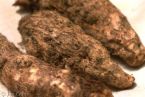
This is what a Malanga or Taro looks like at the grocery store or farmer’s market.  Its sort-of oval in shape and the flesh is lilac and speckled.


               www.khiewchanta.com                                 www.gourmetsleuth.com

I’ve never been to Hawaii – at least not yet… but I learned in the Top Chef Season 2 finale that Taro, or Malanga as we call it here in Puerto Rico, is very widely used, particularly in a typical dish they have called poi.  In Puerto Rico, we mostly boil them in salted water and eat them cut in pieces or mashed drizzled with olive oil. 

But just like any other root vegetable we can make chips… here’s how.


MALANGA CHIPS

1 small malanga, washed and peeled
1 cup of canola oil to fry
Garlic Salt to sprinkle liberally


  1. In a large skillet, heat up canola oil until it is hot enough to fry.  Use the back side of a wooden spoon to know when the oil is ready.
  2. Using a mandolin, slice the malanga in slices as thinly as possible.
  3. Drop the malanga slices onto the oil to fry.  They’ll take about 10 minutes.  Flip them over to make sure the chips fry evenly on both sides.
  4. When the edges start to turn a light golden color, remove them from oil.  Drain them on a paper towel and sprinkle with garlic salt.


I also did a test BAKING the chips instead of frying them.  They actually turned out OK.  Here’s what I did:

  1. Pre-heat oven to 400 F.
  2. Place the malanga slices side-by-side on a baking sheet.  They can touch, but try that they are not on top of each other so they can cook evenly.
  3. Brush each slice on both sides with canola or olive oil.
  4. Bake for about 10-15 minutes.  After the first 10 minutes watch them a bit, and when the edges start turning golden brown, take them out.  They can burn really easily.
  5. Transfer them onto a paper towel to drain any excess oil and sprinkle them with garlic salt.


You can find these in bags already made in health foods or street vendors around Puerto Rico…

Nice and crispy home-made snack for any occasion.  This would be a perfect substitute for any potato chip occasion.  Try it… and let me know if you love them too.

Oooooooooooooooooooooooooooooooooooooooooooooooooooooooooooooooooooooooooooooooo

A bit of nomenclature housekeeping here… and I say this in no way to confuse you.  Just in the interest of being helpful in understanding my post and the main ingredient.

Malanga is the Puerto Rican word used for a Taro root vegetable.  Cubans use the word malanga to refer to a different kind of root vegetable – the one we call yautía in Puerto Rico, which there are 2 kinds – yautía blanca/malanga blanca and yautía lila/malanga lila .  Yautía or Cuban malanga looks like this…

www.gothamstudio.com

Just wanted to you that I know there is a difference in how you call these depending on where you live or how your parents call it.

Puerto Rico was HOT on TV yesterday

5 Jun

Yesterday, June 4, 2008, was a good day for Puerto Rico on the US National TV front…  Puerto Rico and its cuisine were featured in 3 TV shows I TiVo regularly.  Count them THREE in one day.


First off, I saw the Martha Stewart show… granted this was a re-run of a show I had already seen, but yesterday featured the cuisines of 3 Latinas – Michelle Bernstein, Cuban Marisel Pasilla and Puerto Rican Carmen Gonzalez formerly of Lucy of Gramercy and soon opening her own restaurant in NYC.  Granted, her main recipe was not vegetarian, but I can attest it used truly typical ingredients.  She showcased 3 recipes, the most of any of the featured chefs, and her desserts you’ve already heard of here – Tembleque and Coquito.  I was so very proud because I felt she was truly representing our cuisine and flavors… nothing gimmicky about it.  I know that she’ll even make the Tembleque recipe in the Food & Wine Classic in Aspen this coming week… where Puerto Rico will have its second showing.   I’ll be honest, I’ve never seen a kumquat in Puerto Rico…  if they’re available, they’ve never crossed my path.

 

Then, I checked out a re-run of America’s Top Model cycle 9 before deleting it… and to my surprise, the season starts in sunny San Juan where the aspiring contestants board a Royal Caribbean cruise ship.  That’s the extent of it…



But then, we go to the grand-daddy of the Puerto Rico product placements… the first episode in the Top Chef Chicago finale!!!!!  I have to admit, the production crew did a really nice job highlighting a great local Puerto Rican chef, Wilo Benet as the guest judge and using plantains in a fried form as the main ingredient for the QuickFire Challenge.   I love his food…   Pikayo’s is one of my favorite restaurants.  His Wild Mushroom Risotto is amazing and the Portobello Mushroom Carpaccio is awesome.   I also enjoy very much his Gouda Cheese Balls with Guava Dipping Sauce in his less formal restaurant, Payá.

I told you… I was not making it up, that us Puerto Ricans looooooooove our fritters.  I have given you some already:

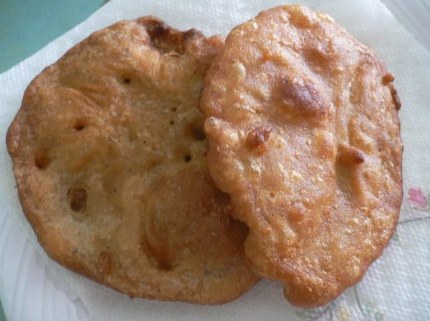
Mock Bacalaítos

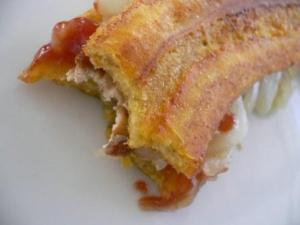
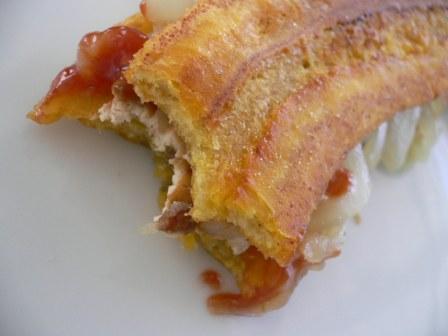
Tostón Sandwich

Falafels

Fried Cauliflower

Eggplant Parmesan Sandwich

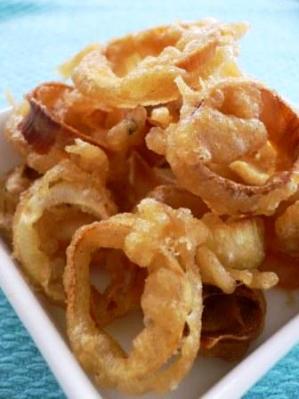
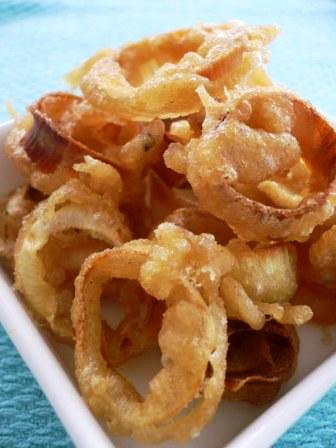
 Fried Leek Rings
 

But I need to do a nomenclature check here…  I may have mentioned this before but just in case I didn’t…  here it is.

Tostón is the singular fried, smashed flat and refried green plantain fritter.  The plural is Tostones, and you need to pronounce the S at the end.    Please refer to them in the correct manner… I could not stand Gail Simmons and Lisa from Top Chef calling a single tostón as tostone.  I can understand the misspelling to help with the phonetic pronunciation, but it is said tostón – With emphasis and an accent on the last O.

The market where the sous chefs went to look for produce is the Plaza de Mercado in Santurce, where I go to buy some of my produce and particularly, get Coconut Water already taken out of the coconut.  It’s relatively close to my house and I even know several of the attendants, so I’ll be giving them grief in the next couple of weeks about appearing on a US TV show.

I was totally impressed about Richard’s knowledge of Malta.  Malta is awesome…  I had one yesterday as a matter of fact, with my veggie version of a Cuban sandwich – A Puerto Rican baguette with Swiss cheese, lettuce, tomato, pickles and mustard pressed and toasted to perfection.  Malta is the perfect accompaniment because it’s sweet and it matches well with the salty pickles and mustard, plus it’s how I learned to eat a Cuban sandwich or a Media Noche.  It’s not completely karma-free because of its caramel color and high amounts of sugar, but I will not hide it or deny it.

 

I just wanted to share my pride about witnessing my little Island of Puerto Rico being showcased all around US National TV all day yesterday.  I will continue sharing my Puerto Rican Delicacies with all of you in the near future… a testament that you can eat veggie and still maintain your cultural roots, even when you grow up in a country with a non-veggie culture. 

Buen provecho and please come visit me in sunny Puerto Rico soon.

Mock Bacalaítos – BacalaFREEtos

2 Jun

Ok… you’ve made the Potato Leek Soup, you garnished it with the fried Leek Rings… but what do you do with the left over batter from the Leek Rings?  Do you throw it out?  Of course not!!!

Let me tell you the story about the Bacalaíto…  what’s a Bacalaíto?

Bacalao is the word in Spanish for Codfish – the salted dry codfish.  They one that looks like an old dried-out shoe sole.  I mean, the fresh codfish is also called bacalao, but you need to preface it by saying it’s fresh bacalao, because traditionally the codfish eaten here is the dried out kind.  Enough with the cod lesson…

Well, a very traditional Puerto Rican fritter is made with the rehydrated and de-salted cod mixed in with a flour batter.  If you go to any Puerto Rican street fair, there will be several stands selling these fritters…  one of my favorites when attending the Fiestas de San Sebastian…  So now that I am vegetarian, how do I satisfy my cravings on these delicious and greasy fritters?

Well, I learned that honestly, if you season the batter well enough, the fried flour mixture will taste exactly like a bacalaíto, but without adding any of the codfish.  Newsflash to all traditional bacalaíto makers… it’s even simpler to make because you don’t have to de-salt and rehydrate anything that once was alive…  it’s the Mock Bacalaíto.  I’ve tried to look for a better name… but locals would not know what it is if I call it something else besides bacalaítos…

UPDATE 1/25/2011 – My friend Angie has coined a NEW NAME for these fritters – BacalaFREEtos… as in Free of Bacalao, KarmaFREE Cooking, and they’re Fried (fritos in Spanish) it’s just too clever huh???  So that’s how we’re calling them from now on.  Angie – you have full name rights on this one!!!

 People can’t believe they taste so much like the real thing… the secret is in seasoning the batter well.  Here’s how…


MOCK BACALAITOS

½ cup whole wheat pastry flour – this will work well with spelt flour too
About equal parts of water
1 tbs sofrito
½ tbs of Kosher Salt
½ tbs of Pepper
Canola oil to fry


  1. I’ll be honest, I have never measured the amounts of the seasoning…  but the batter should taste well-seasoned.  You need it to taste like something, not just like wet flour.
  2. In a large skillet, heat about 1 ½ inches of canola oil.  Make sure the oil is very hot before frying the first batch.  Try inserting the back end of a wooden spoon into the oil and the oil will be ready when you see bubbles around the wood.
  3. Using a large spoon or ladle, pour some of the batter into the oil, like making silver-dollar pancakes.  Wait until the batter has set a bit on the first “bacalaito” before you pour on another ladle.  If they fuse to each other, they’ll be difficult to turn.
  4. Fry on one side until the batter turns crisp and golden brown on one side.  Flip and fry some more until evenly golden.
  5. Transfer the fritters onto a plate with paper towels to drain the excess oil.  No need to season them again.

Enjoy them as a snack with your favorite natural soda or natural juice drink.   Give these to anyone at a party and you’ll see them flying off the plate.  There are restaurants here that serve these as appetizers even.

This is definitely not food for everyday…  this is a fried snack to eat sparingly.  But believe me, I make a batch of these before going to any street festival so that the smell of the real kind will not lure me in… trying to keep those temptations at bay…

And to all those Puerto Ricans out there… there’s no need to do without these Puerto Rican delicacies when you go vegetarian… 

Buen Provecho!