Archive | Puerto Rican delicacies RSS feed for this section

Plantain Little Spiders – Arañitas

10 Dec

This was supposed to be a recipe for Halloween… you know, the play on words – arañitas means “little spiders” in Spanish. Their name is mainly due to their scraggly shape, because they’re fully vegetarian and have nothing to do with the little arachnid creatures. But maybe they’re more appropriately called in English, Plantain Nests, making them a very nice option for Easter too.

This is yet another way Puerto Ricans love to eat green plantain. Variety is the spice of life and there are 1,001 ways we can cook a plantain. Tostones are most popular because they can be prepared in advance. Arañitas is something you need to grate, season and cook immediately. Not for the prep-ahead cook.

You can fry them in oil, just like you do with platanutres or chicharritas de pátano. But I have devised a way to enjoy the goodness of this Puerto Rican favorite without the need to get the deep fryer out. I am Latin, but I do not enjoy having to clean the splatter of a frying pan filled with oil.

Here is how I make arañitas…

PLANTAIN LITTLE SPIDERS – ARAÑITAS

1 green plantain, peeled
1 tbs canola oil
Garlic Salt


  1. After you peel the green plantain, grate it in as long strips as possible. I try to grate it on the long side to get longer strips of plantain.
  2. In a medium bowl, add the grated plantain, season with garlic salt and add the canola oil. Mix it all well to ensure the plantain is oiled and well-seasoned all over.

3.  In a non-stick skillet over low-medium heat, place little mounds of plantain. The low heat will allow the plantain mounds to cook on the inside. After a few minutes, you’ll see the outside plantain will start to stiffen and crisp up. Flip when you notice the center of the mound is turning yellow.

see why they could certainly be called nests????

4.  Keep the heat at medium-low. The arañitas will eventually crisp up on the outside and start turning golden brown.
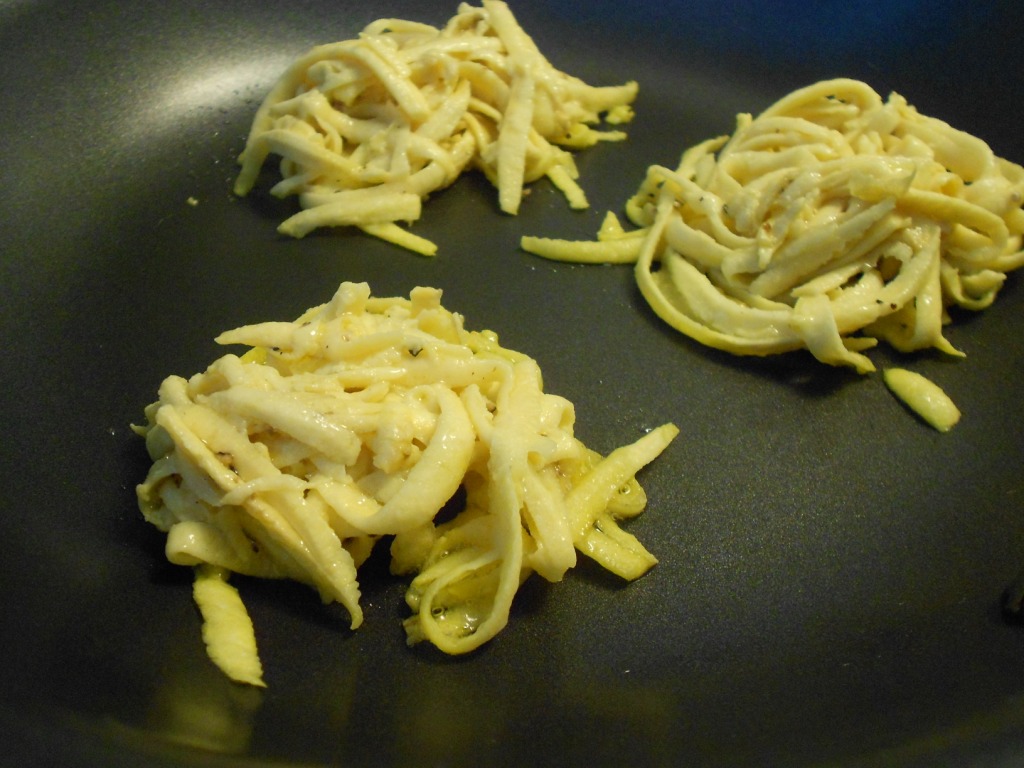
5.  Take them out of the skillet and allow them to drain a bit on a paper towel. They may not drip any oil, but any excess oil is better left on a paper towel.

Serve alongside your favorite Puerto Rican dish – like macarrones with soy picadillo, arroz con gandules or as croutons for a delicious salad.

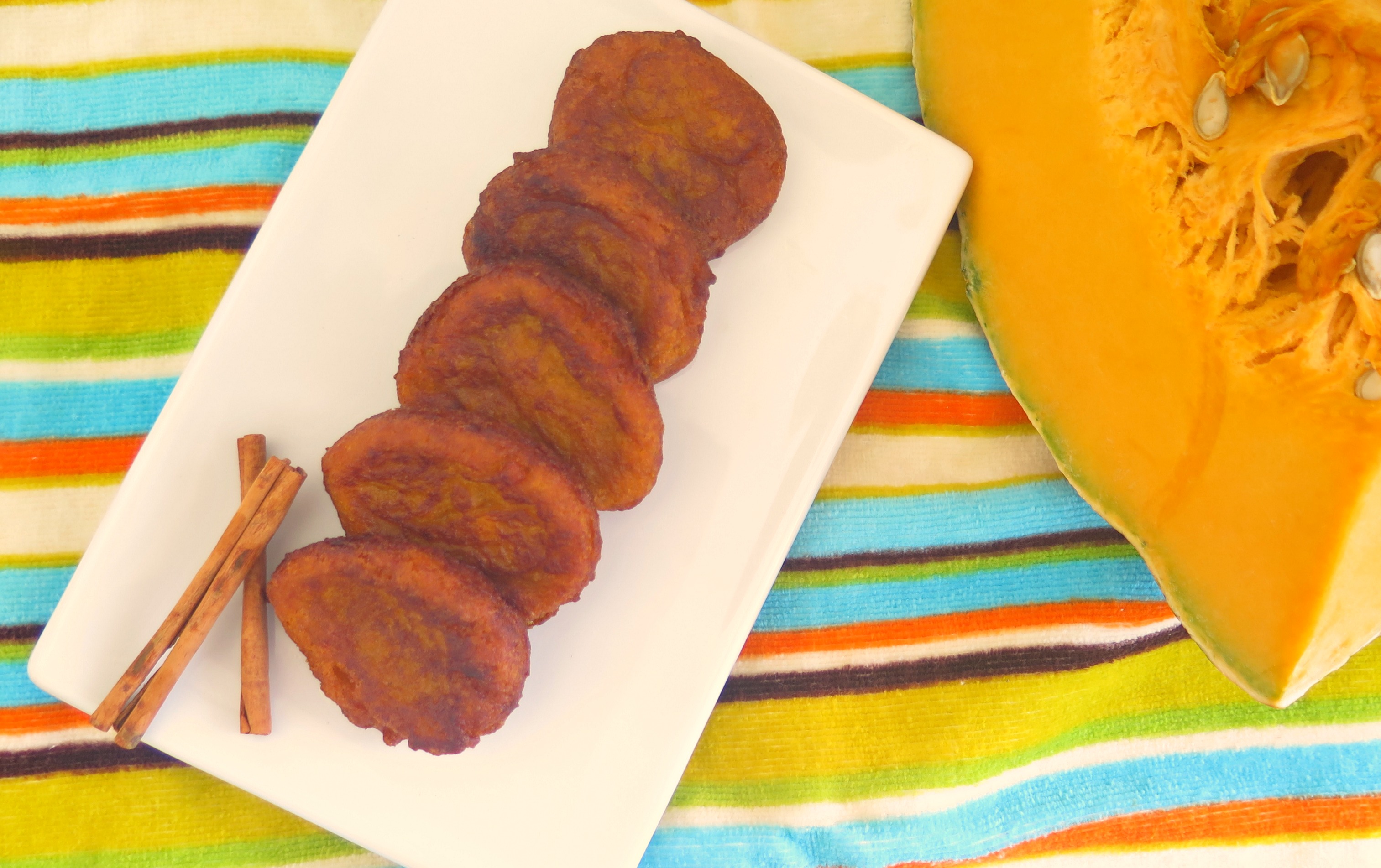
Puerto Rican Pumpkin Fritters

3 Dec

In Puerto Rico, these pumpkin fritters are called “barriguitas de vieja” or “old lady bellies”… I just think that name is a tad discriminatory. Who said all old ladies bellies are sweet and wrinkly??? I am sure some old bellies out there are not sweet… LOL!!!!! I am so lame, I laugh at my own jokes…

Enjoy these, which are super delicious regardless of my bad jokes.

Puerto Rican Pumpkin Fritters

PUERTO RICAN PUMPKIN FRITTERS

2 cups fresh pumpkin puree
½ cup whole wheat pastry flour
1/3 cup brown sugar
1 tsp ground cinnamon
A few grates of fresh nutmeg
½ tsp salt
1 ½ tsp egg replacer + 2 tbs water
Canola Oil for frying
  1. First we steam the pumpkins to make the puree… I just peel and cut some pumpkin pieces and place them in a shallow pan that has a lid. I add about ½ inch of water and some kosher salt. Cover the pan and bring to a boil over medium-high heat. As soon as you hear the water inside boiling, turn down the heat and allow the steam inside cook the pumpkins for about 10-15 minutes. Check the pumpkins at about 10 minutes… if they’re not completely done, just cover again, wait about 1 minute and turn off the heat and leave there uncovered for some 10-15 minutes more. They’ll be done by then.
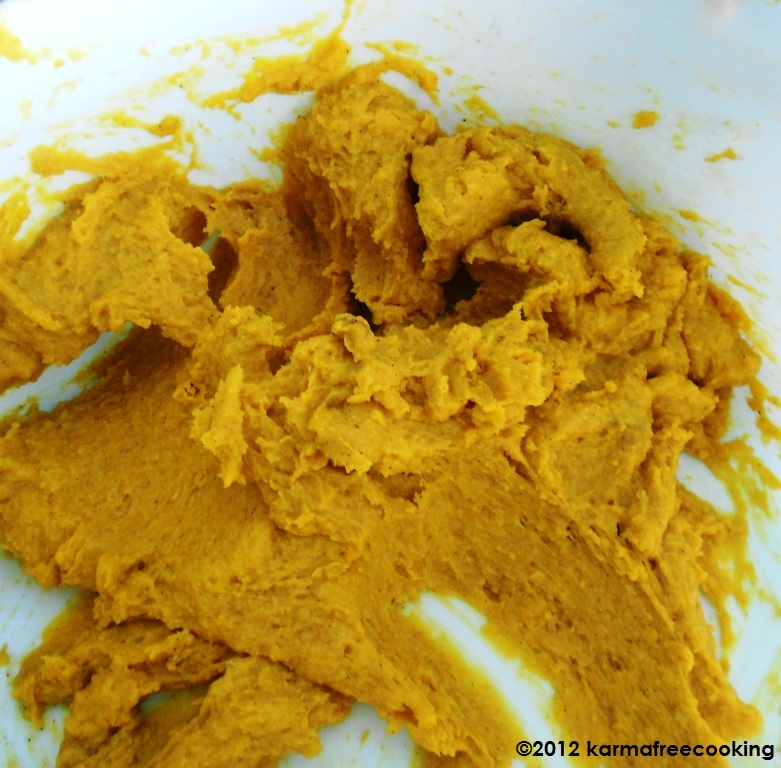
  2. I just take the pumpkin pieces out into a bowl and mash… if you feel they’re too stringy, you can certainly pass the mashed pumpkin thru a sieve. But I don’t usually do that… I don’t find it’s necessary. You can certainly do all this steaming and mashing ahead. I did it the night before to use the mashed pumpkin for this recipe and for a pumpkin cheesecake I was making too.
  3. In a small bowl, mix the egg replacer with the water. Stir vigorously or whisk and set aside.
  4. Now we assemble the batter… in a large bowl mix together all the ingredients, including the egg replacer mix. I use my hands to mix well and almost knead the recipe. I tried using a spoon or spatula and it does not work well.

5.  In a frying pan add about 1 inch oil to fry these fritters over medium-high heat… wait until the oil has reached temperature before adding the first one. I usually check if the oil is ready by inserting the back side of a wooden spoon into the oil. If the oil bubbles around it, the oil is ready.

6.  Using 2 spoons create little mounds of batter to fry. My mom likes to spread them a bit once they’re in the pan so they’re not too thick and they fry faster. Once they’re golden brown on one side, flip them over to fry on the other side.

7.  Once they’re cooked and golden brown on both sides, take them out and drain on a plate lined with paper towels.

Puerto Rican Pumpkin Fritters 2

When they’ve cooled off a bit, enjoy one after the other. You’ll see they’re addictive…

Piña Colada Smoothie

28 Nov

Piña Coladas are the quintessential Caribbean drink… Wanna make them even more nutritious??? Let’s take the flavors and make it into a smoothie, perfectly suitable for a breakfast drink.

PIÑA COLADA SMOOTHIE

1 banana
½ cup pineapple, cut into cubes
½ cup vanilla yogurt
2 tbs cream of coconut – I use Coco López
1 tsp ground flaxseeds
2 -3 ice cubes
About ½ cup Water or pineapple juice – enough to make the mixture blend well in the blender.


This is a recipe for one smoothie… I blend it all in my Magic Bullet.

  1. Mix all the ingredients well in a blender.
  2. Serve immediately.
  3. Garnish with a piece of fresh pineapple, but this is completely optional.


Piña Colada – Puerto Rico’s National Drink…

24 Sep

This is a post originally published as a guest post on Flanboyant Eats…   Here is the link to the Original.   Thanks Bren for the opportunity!!!


I have to thank Bren for always extending me an invitation to get featured in her awesome blog…

She asked us to bring forth something that would represent my Hispanic roots to celebrate Hispanic Heritage Month. I could not think of a more iconic drink than the Piña Colada. The Piña Colada has become the signature drink of the Caribbean, vacations and the beach.

According to the plaque, it was born on the streets of Old San Juan, on Calle Fortaleza. But there are stories the Piña Colada was invented by a barman in the Caribe Hilton Hotel. What I do like about both these stories – they both agree the Piña Colada is Puerto Rican. No doubts about that… one of our many, many contributions to the world.

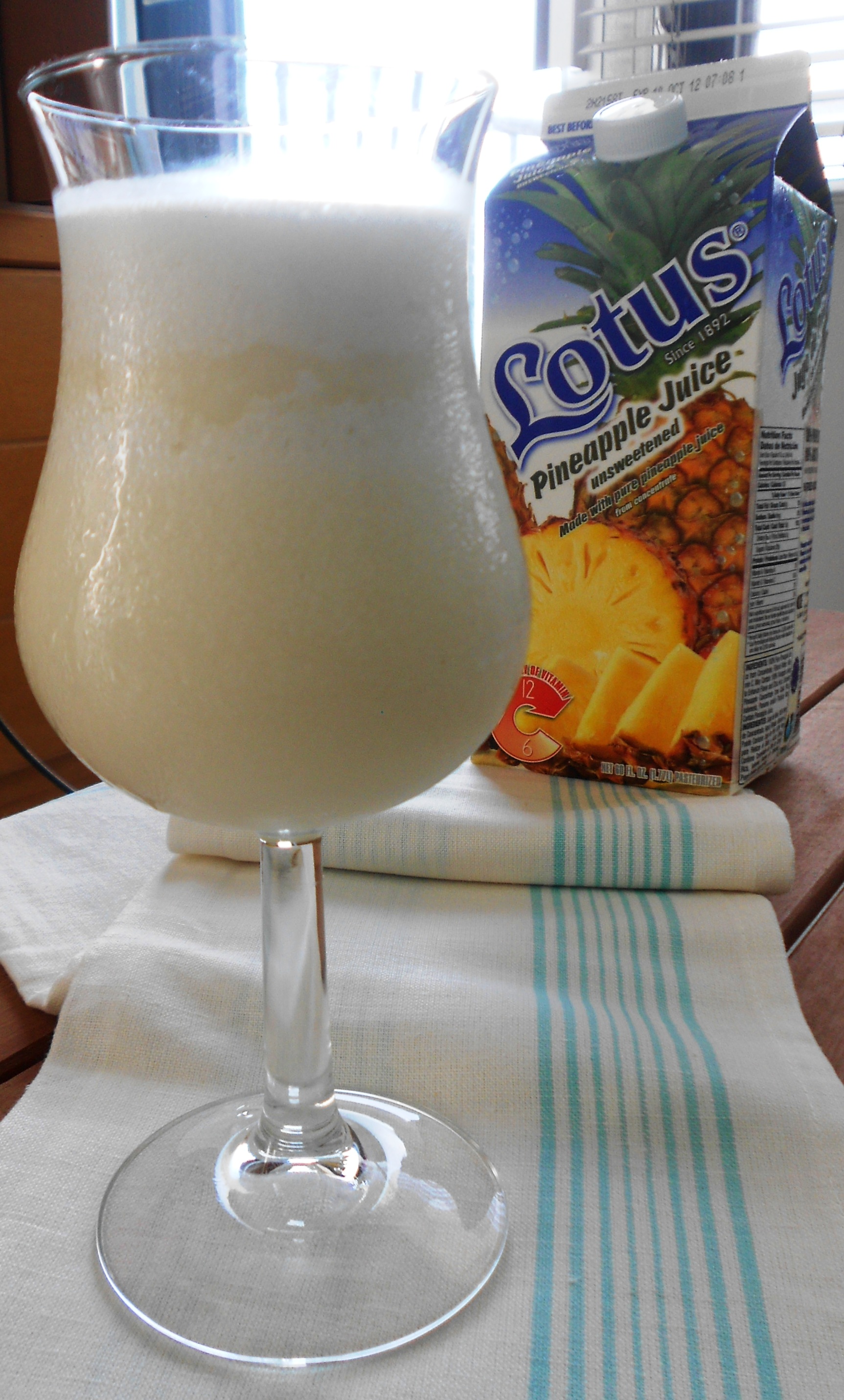
I’ve seen many versions of this typical creamy beverage, but an authentic Piña Colada has merely 3 ingredients – Cream of Coconut, Pineapple Juice and Ice. You could add a little rum if you want, but the alcohol does not make the drink. A virgin, karma-free version is equally as satisfying, if not more, in my humble opinion.

This is a Piña Colada version that adults and kids alike can enjoy and feel as if they’re swept away into a beachy retreat… if at least for a few sips at a time.

VIRGIN PIÑA COLADA

1 cup of cream of coconut – I like Coco López
1 cup of pineapple juice – I like Lotus
6-8 ice cubes
Pineapple chunks and cherries for garnish


  1. Blend all the ingredients well in a blender. The coconut cream will make the mixture frothy and creamy. It will also provide all the sweetness you’ll need.

This recipe makes 4 drinks… or 2 very large ones.


Guava Puree

10 Sep

I love guavas… I love guava paste… It’s part of the Puerto Rican/Cuban culinary DNA.

We used to have a guava tree behind our first house and I loved to eat fresh guavas right from the tree. Some are sweet… some are sweeter. But it’s definitely a fruit that represents me and my childhood.

You need to be careful when eating fresh guavas… you can’t chew on the pulp too much. Just a bit to puree the pulp in your mouth and swallow. Why?? Guavas have these little pesky seeds. These seeds are small enough that will remain almost untouched by the blade of a blender yet large enough to threaten to crack a molar of any adult if you bite into one.

This was not a concern when I was little, but after experiencing a few not so positive experiences with cracked molars, we protect our teeth as much as possible. Besides… the seeds taste like nothing. We can certainly get rid of them before any damage is done.

GUAVA PUREE

Guavas, peeled and cut
Water

It is important when you peel and cut the guavas to look out of the fruit has any holes in it. If it does, it is very likely that guava may have one or a few little worms inside. Don’t be squeamish… this is all part of dealing with fresh guavas.

Just cut the guavas and inspect them a bit around the part where the seeds are. If there are worms, they will be moving… just remove them carefully and place them in a piece of paper towel. I may be creating bad karma for myself, but I kill them by squishing them in the paper towel. You may want to dispose of them in a different way… that’s entirely up to you.

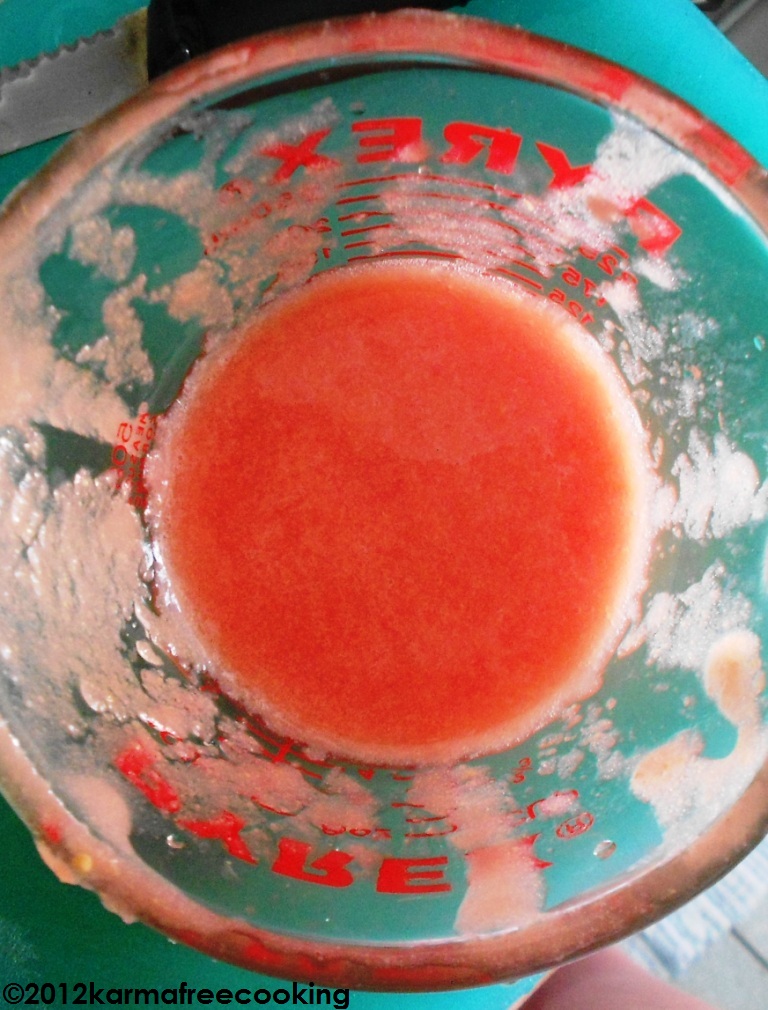
  1. All you need to do is place the guava pieces into a blender with some water. I do not measure the water… but the more water you add, the looser the puree will be.
  2. After you process the guavas for a few minutes in the blender, you can strain it thru a sieve. The guava puree will go thru and the guava seeds will remain on the sieve.

Store the guava puree in a pourable container so you can use it in your favorite drinks or recipes.